Zia Randhawa - Knowledge Curator
Zia Randhawa serves as the Knowledge Curator for Shabab Al Yola. He has a strong background in fashion history with a keen eye for modern trends. Zia conducts in-depth research on global thobe styles, fabric innovations, and market shifts. His work bridges the gap between traditional modesty and contemporary fashion to provide readers with data-backed insights and style guides.
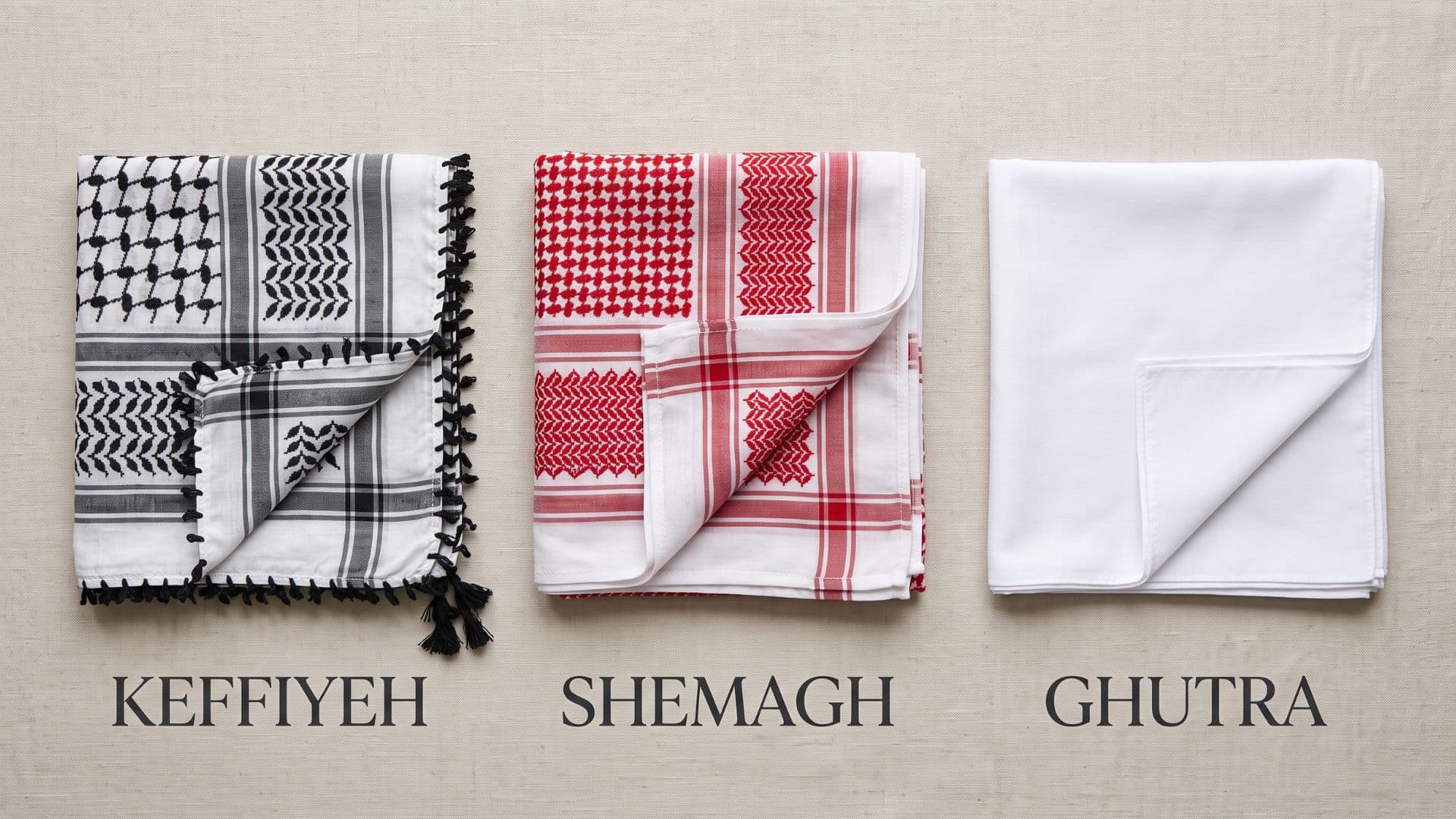
If you have spent time shopping for traditional Arab headwear or Islamic clothing, you have likely asked yourself: "What's the difference between Keffiyeh, Shemagh, and Ghutra?" All refer to square scarves worn across the Arab and Muslim world. But they are not the same garment. Each one carries its own origin, pattern, cultural meaning, method of wearing, and regional identity.
This guide covers all three in full detail. You will find the history of each garment, how to tell them apart, which fabric to look for, and when each is the right pick. A full FAQ section at the end answers the most commonly asked questions.
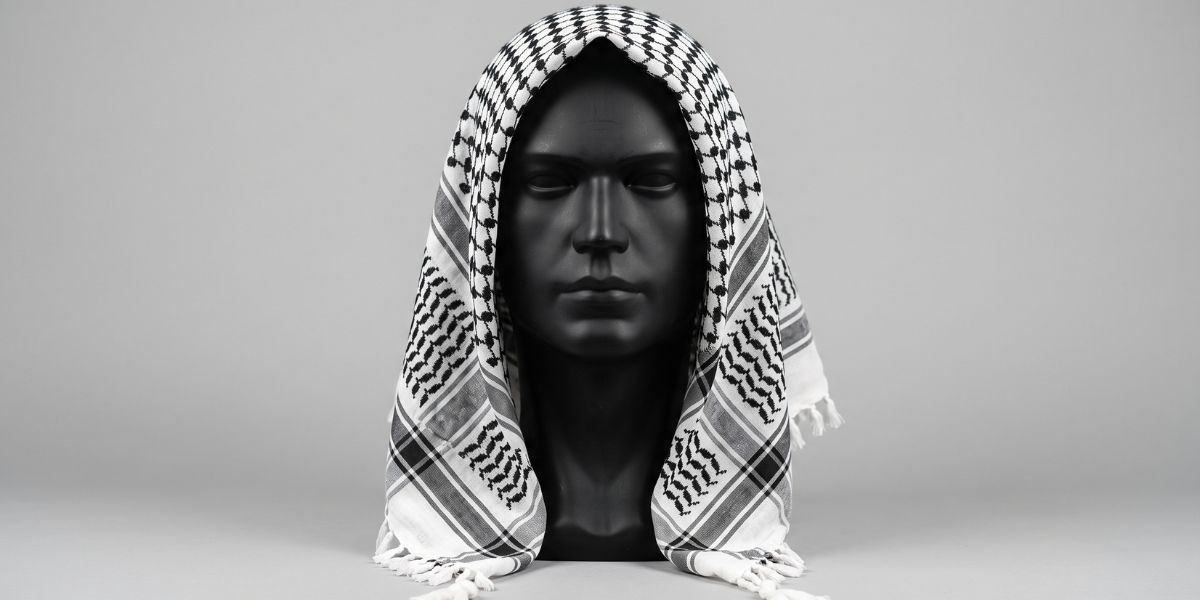
The keffiyeh (also spelt kufiya, kaffiyeh, kuffiyeh, or kufiyeh) is a square woven scarf with one of the most recognisable textile patterns in the world. It is most closely associated with Palestine and the Levant region. The Levant refers to the eastern Mediterranean area that includes Palestine, Syria, Jordan, Lebanon, and parts of Iraq.
The word "keffiyeh" is linguistically traced to the Iraqi city of Al-Kufa (الكوفة), one of the oldest Islamic cities on the Euphrates River. The garment itself, however, developed across the broader Levant region among Palestinian farmers and shepherds, who wore it for practical protection against the sun, dust, cold, and wind. Before the keffiyeh carried the cultural weight it holds today, it was a working garment worn by rural communities across historical Palestine.
The keffiyeh's transformation from a practical rural garment into a cultural symbol happened during the Arab Revolt of 1936 to 1939. During this period, Palestinian fighters and civilians began wearing the keffiyeh to make identification by British mandate authorities more difficult. The garment spread from rural use into wider Palestinian society. It became associated with resistance and Palestinian national identity.
Palestinian leader Yasser Arafat played a central role in giving the keffiyeh its international visibility. He wore the black-and-white keffiyeh in a specific draped style over one shoulder at virtually every public appearance throughout his life. This made the black-and-white keffiyeh one of the most photographed and politically significant garments of the 20th century.
Today, the Hirbawi textile factory in Hebron, a city in the southern West Bank of Palestine, is widely recognised as the last remaining Palestinian-owned keffiyeh manufacturer still producing the garment on traditional looms. An authentic Hirbawi keffiyeh is both a cultural product and a form of tangible heritage preservation.
The keffiyeh pattern is a woven geometric design. It features a structured grid of thick outlines on a lighter background, finished along the borders with chain-like or leaf-like detail. This is a woven construction, not a printed one. The pattern is built into the fabric on the loom.
The same garment is called by different names depending on the country and the Arabic dialect spoken there.
The shemagh (also spelt shmagh, shimagh, or shmagg) is a square patterned scarf most closely associated with the Arabian Peninsula, particularly Saudi Arabia, Jordan, Iraq, and Yemen. It shares the same fundamental shape as a keffiyeh but typically has a heavier fabric weight and a bolder visual character.
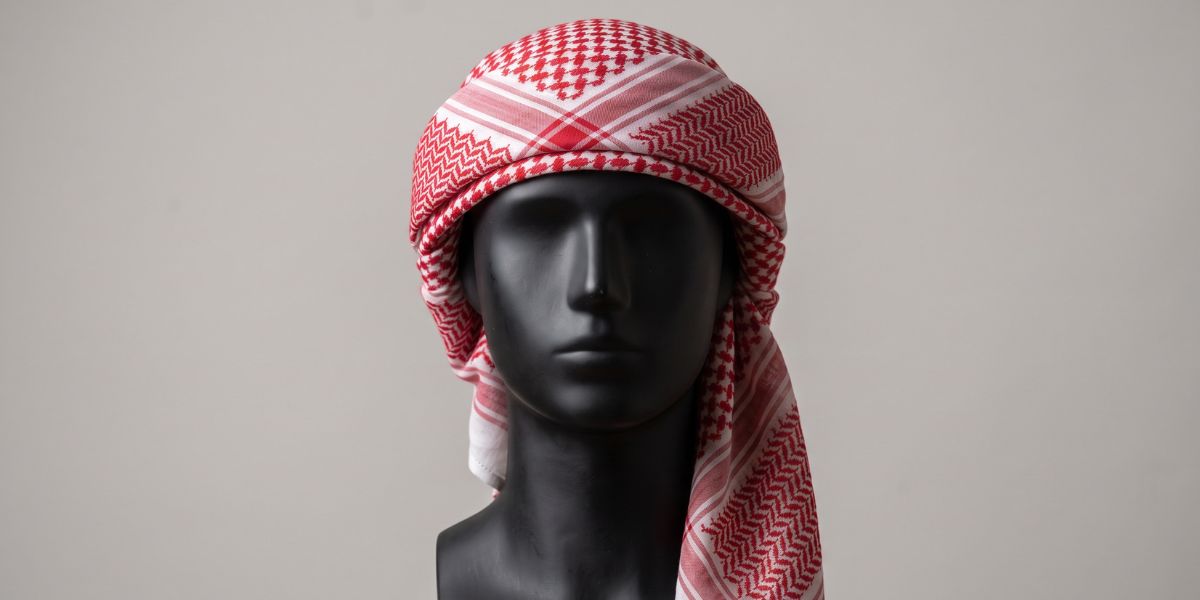
The shemagh has been worn across the Arabian Peninsula and surrounding regions for centuries. It developed as a practical field garment. Its size and thickness allowed the wearer to use it to cover the head, face, neck, and shoulders as needed. In desert environments, it protected against intense daytime heat and cold at night. During sandstorms, it could be completely wrapped around the face.
British forces first encountered the shemagh in significant numbers during World War I campaigns in the Middle East. During World War II, it became more widely adopted across British military units operating in North Africa and the Levant. The British Special Air Service (SAS) is particularly associated with bringing the shemagh into Western military culture, where it has remained in regular use ever since.
Today, military and special forces units from the United Kingdom, United States, Australia, Canada, and many other countries use the shemagh as standard field equipment in arid and desert operations. Its practical function is the same as it was centuries ago: protection from the environment.
The classic shemagh color combination is red and white. This version is traditionally associated with Jordan and is widely worn in Saudi Arabia and the broader Gulf and Levant region. The Jordanian red-and-white shemagh is sometimes called a hattah locally.
A khaki or tan-and-white variant is the most commonly seen in military use. It is less visible in desert terrain than the bright red-and-white version.
The woven pattern on a shemagh follows the same basic geometric grid structure as a keffiyeh. The difference in visual impression comes primarily from the color combination and the fabric's heavier feel.
Are a Keffiyeh and Shemagh the Same Thing?
This is the most commonly asked question about these two garments. The honest answer is that the boundary between a keffiyeh and a shemagh is largely regional and cultural rather than a hard structural distinction.
Both are square-patterned scarves made of woven cotton. Both use the same fundamental geometric woven pattern. The main differences are the color association and the regional naming tradition. A red-and-white patterned scarf worn in Palestine is typically called a keffiyeh. The same scarf sold in Riyadh would more likely be called a shemagh or shmagh. In the UK and Western retail, the terms are often used interchangeably to refer to any patterned scarf of this type, regardless of color.
The genuine practical difference lies in the fabric weight. Shemaghs are often heavier and thicker than keffiyehs, which makes them better at holding their shape when draped and more suitable for cold weather use.
The ghutra (also spelled gutrah or ghutrah) is the plain white square headscarf worn as part of the traditional national dress of the Gulf Arab countries. It is fundamentally different from the keffiyeh and the shemagh in both appearance and function.
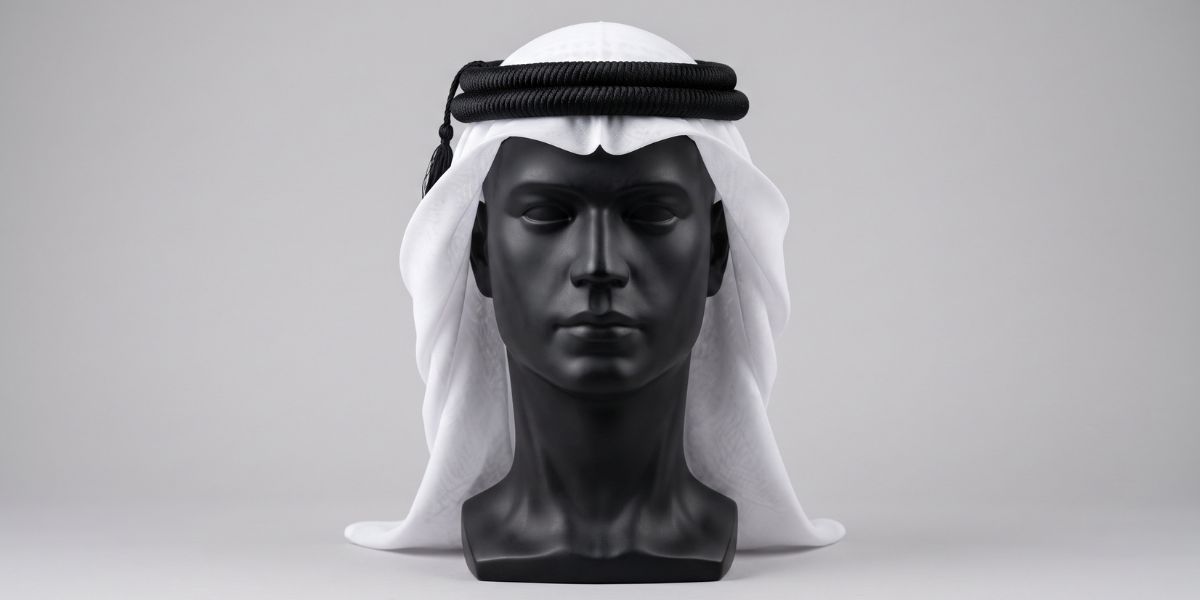
Where a keffiyeh or shemagh is a patterned garment worn in various ways around the neck, shoulders, or head in casual and formal settings, the ghutra is plain white and is worn specifically on the head as part of a formal national dress ensemble.
The word ghutra (غترة) is Arabic in origin. The ghutra is part of the traditional national dress of Saudi Arabia, the United Arab Emirates, Qatar, Kuwait, and Bahrain. In these countries, it is worn daily in professional, religious, and formal settings. It is not a casual scarf. It is a component of formal Gulf Arab male dress.
In the UAE, the ghutra is part of the kandura. The kandura refers to the full-length white Emirati thobe worn with the ghutra and agal. In Saudi Arabia, the ghutra is paired with the thobe. For very formal occasions and ceremonies, a bisht (a long ceremonial cloak) is added over the thobe, beneath which the ghutra is visible at the head.
Feature | Keffiyeh | Shemagh | Ghutra |
Origin | Palestine + Levant | Arabian Peninsula, Jordan, Iraq, Yemen | Gulf Countries |
Arabic Name | Kufiya, kuffiyeh, keffiyeh | Shmagh, shimagh | Ghutra, gutrah |
Regional Variants | Hattah (Jordan), chefieh (Iraq), kufiya (Egypt) | Hattah (red and white in Jordan) | Gutrah (UAE) |
Common Colors | Black and white, red and white, green and white | Red and white, khaki and white | Plain white only |
Pattern | Geometric woven grid with chain border | Geometric woven grid, bolder design | No pattern |
Fabric Weight | Light | Medium to Heavy | Light to medium |
Standard Size | Approx. 127cm x 127cm | Approx. 127cm to 140cm x 127cm to 140cm | Approx. 145cm x 145cm |
Worn On | Head, neck, shoulders | Head, neck, shoulders, face | Head only (traditional) |
Availability in West | Very widely available | Very widely available | Less common |
The fabric of a keffiyeh, shemagh, or ghutra directly determines how it feels, drapes, performs in different weather, and holds up over time.
Cotton is the most common and most desirable fabric for all three garments. It is breathable, soft against the skin, and practical in both warm and cooler weather. A cotton keffiyeh or shemagh in summer is comfortable and does not trap body heat. A cotton ghutra stays crisp and clean-looking after ironing.
When shopping, look for a tight and even weave. Hold the fabric up to the light. A quality weave will have a consistent pattern without loose threads or uneven spacing. The border stitching at the edges should be clean and finished tightly to prevent fraying over time.
Cotton-polyester blends are common in shemaghs and some ghutras. They tend to be more durable, resist wrinkles better, and hold their shape after washing. The downside is reduced breathability compared to pure cotton, which can be noticeable in warm weather.
Wool or wool-blend shemaghs are available for cold-weather use. These are significantly heavier, very warm, and suited for winter conditions. They are not practical as everyday warm-weather garments. A wool shemagh in summer would be uncomfortable.
Each headscarf is worn on a specific occasion. You must know when to style which headscarf. So here is the guideline:
The keffiyeh is the best choice for everyday wear, Friday prayers, Eid celebrations, and modest casual styling. It is lightweight and easy to put on. It works well draped over the shoulder with a thobe, jubba, or kurta. It is also a common and meaningful gift because of its cultural history. For first-time buyers, the keffiyeh is the most straightforward and versatile starting point.
The shemagh works well when you want a more structured look. Its heavier drape holds position throughout the day without needing adjustment. It is a strong choice for wearing with a thobe at gatherings, Eid events, weddings, and travel. In winter, a heavier cotton or wool-blend shemagh adds warmth alongside its styling function. For buyers who want more body and structure in their drape, the shemagh is the better pick over the keffiyeh.
The ghutra is the right garment for formal Gulf dress occasions. It suits national events, formal weddings, professional settings in Gulf countries, and ceremonies where traditional Gulf national dress is appropriate. It is not typically worn as a casual shoulder scarf. Its function is specific to the formal national dress tradition of the GCC countries.
The ghutra is worn year-round in the Gulf region, where it is part of daily formal dress regardless of season. Lighter cotton versions are preferred in summer, and slightly heavier cotton versions may be worn in the cooler Gulf winter months.
One of the most confusing aspects of these garments for new buyers is that the same item goes by completely different names depending on the country.
The keffiyeh, shemagh, and ghutra are three distinct garments that get grouped together because they share the same square shape. Once you understand where each one comes from, what it looks like, what it is made from, and how it is worn, the differences become clear and easy to remember.
The keffiyeh is associated with Palestine and the Levant. Its pattern and colours carry decades of history and cultural identity. The shemagh is associated with the Arabian Peninsula and surrounding regions, with a parallel history of military use worldwide. The ghutra is part of the formal national dress traditions of the Gulf countries, worn daily alongside the thobe and agal.
Understanding these differences helps you choose the right garment for the right moment and wear it with the meaning it carries.
They are very similar in shape and construction but different in origin and cultural association. Both are square-patterned scarves made of woven cotton. The keffiyeh is most closely associated with Palestine and the Levant. The shemagh is more associated with the Arabian Peninsula, Jordan, Iraq, and Yemen.
The most visible difference is the colour. The black-and-white pattern is strongly associated with Palestinian identity. The red-and-white pattern is more common in Jordan, Saudi Arabia, and the broader Gulf region. Both use a similar woven geometric pattern on their surface.
The black-and-white version became a symbol of Palestinian resistance and national identity during the 20th century, particularly following the Arab Revolt of 1936 to 1939 and the global visibility of Palestinian leader Yasser Arafat.
Yes. The keffiyeh and shemagh are garments, not religious items. They do not carry a religious obligation for their wearers in the way that the hijab or turban does. People around the world wear them as fashion accessories, travel scarves, or practical sun protection.
A hattah (also written as hatta or kufiya hattah) is the Jordanian Arabic word for the traditional patterned head covering. It most often refers to the red-and-white version widely worn in Jordan. The garment itself is the same type of square-patterned scarf, called a shemagh in Saudi Arabia and a keffiyeh in Palestine.
A standard keffiyeh or shemagh is approximately 127cm x 127cm (50 inches by 50 inches). Some larger versions are available at 135cm x 135cm or 140cm x 140cm. A standard ghutra is typically around 145cm x 145cm.
In the Gulf countries, the ghutra is everyday wear because it is part of national formal dress. Outside of the Gulf, particularly in Western countries, the ghutra is mostly worn for formal occasions, cultural events, and religious gatherings.
Yes. A ghutra can be worn without an agal. Without the agal, it can be folded and draped over the shoulders or placed loosely over the head.
Both work well with a thobe. The choice depends on the occasion and the look you want. A keffiyeh draped over the shoulder gives a lighter, more relaxed feel. A shemagh gives a heavier, more structured drape that holds its position better throughout a long event. For Eid prayers, weddings, and formal gatherings, the shemagh tends to stay in place and look put-together for longer. For everyday Friday prayer or casual wear, the keffiyeh is the lighter and easier option.