Imtiaz Ahmed - Head of Tailoring Team
Mr. Imtiaz Ahmed is working as a head of tailoring department at Shabab Al Yola. Over nearly two decades, he has worked with local clients across the Gulf and international customers who expect Gulf-standard tailoring delivered to their door. His hands-on experience covers every major regional style, including Emirati, Saudi, Qatari, Kuwaiti, and Omani cuts, along with the fine details that separate a well-made thobe from a great one. At Shahbab Al Yola, Imtiaz personally oversees the construction of every regional silhouette the brand produces. He knows Gulf garment-making inside out and brings that knowledge into every piece the brand produces.
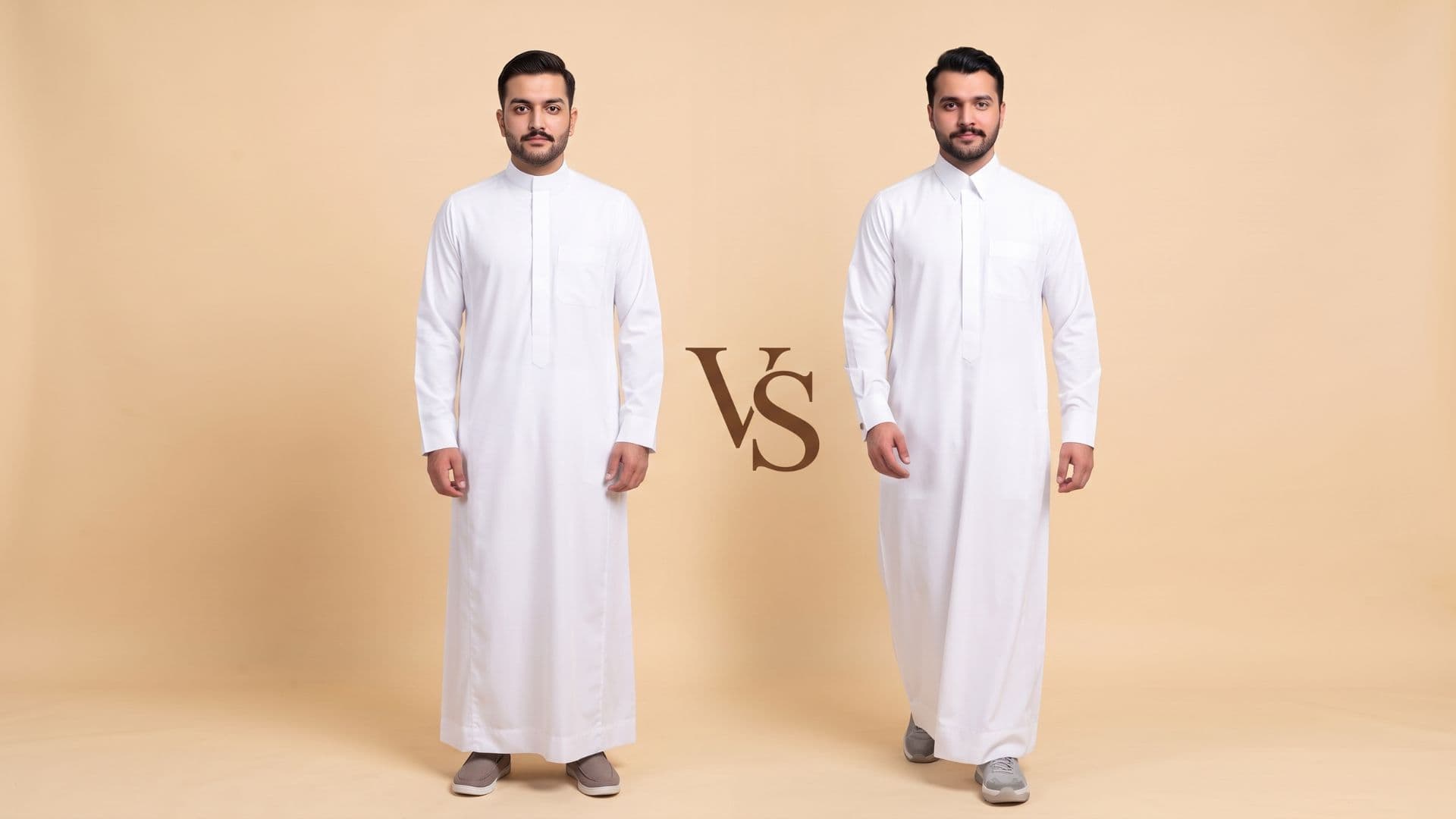
Saudi thobe and the Qatari thobe are not the same garment. Both are long white robes, cover the full body and have long sleeves. But when you have a closer look it will reveal clear differences like:
I will walk you through every difference in a simple and clear way. By the end you will know exactly how to tell a Saudi thobe apart from a Qatari thobe.
Both Saudi thobe and Qatari thobe are mostly white and cover the full body but the collar, cuffs and fit are what set them clearly apart from each other.
Features | Saudi Thobe | Qatari Thobe |
Collar Style | Simple band collar sitting flat around the neck | Firm structured standing collar |
Fit and Cut | Relaxed and straight cut | Slightly structured and defined fit |
Cuff Style | Open and relaxed with no buttons | Stiff structured button cuffs |
Fabric | Light weight cotton or polyester blend | Poly cotton, treated cotton or wool for winter |
Headwear | Red and white shemagh or white ghutra with agal | Plain white ghutra with cobra fold and agal |
Main Colors | White, grey, beige, brown in winter | White, off white, cream, darker tones in winter |
Overall Look | Relaxed, comfortable and clean | Sharp, structured and formal |
The collar is the most visible difference between the Saudi thobe and the Qatari thobe.The Saudi thobe has a band collar. A band collar is a simple upright strip of fabric that sits around the neck without folding down. It does not look like a shirt collar. It is plain, clean and sits flat around the neck. There are no folded edges or wings on either side. This gives the Saudi thobe a very simple and understated neckline.
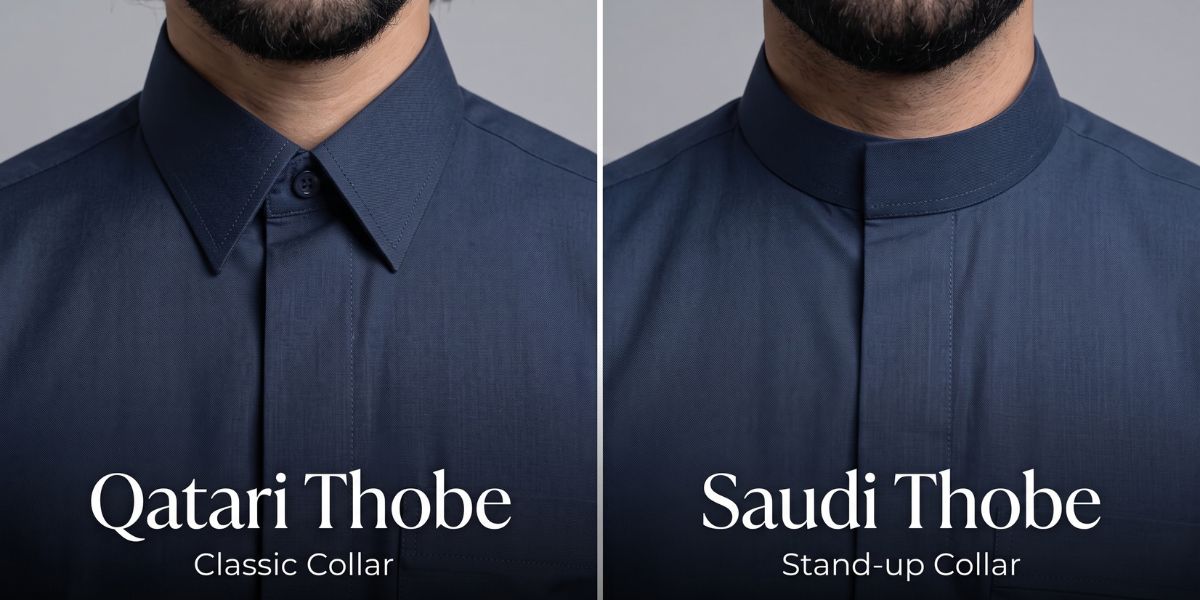
The Qatari thobe also has an upright collar but it is noticeably stiffer and more structured than the Saudi band collar. The Qatari collar stands firmly around the neck and holds its shape throughout the day. Starch is often applied to keep it firm. Starch is a spray used during ironing to make fabric stiff and crisp. This standing collar gives the Qatari thobe a sharp and distinguished appearance that is immediately recognizable.
The fit is where the two thobes feel most different when you actually wear them.
The Saudi thobe has a relaxed and straight cut. It falls loosely from the shoulders downward. There is plenty of room around the chest, waist and arms. This relaxed fit makes it very comfortable for long hours of daily wear. It suits hot weather because of its loose fabric which allows air to move around the body freely.
The Qatari thobe has a slightly more structured fit. It sits a bit closer to the chest and shoulders compared to the Saudi thobe. The fabric holds its shape more firmly. It does not feel tight but it gives a more defined and upright appearance. The structured fit matches the stiff collar and creates a very sharp overall look. Men who prefer a more formal and put together appearance often prefer the Qatari thobe.
The Qatari thobe has structured and stiff button cuffs. The cuffs are neat and firm. Their stiffness is consistent with the standing collar and gives the whole garment a uniform and formal appearance. At some special occasion Qatari men also use cufflinks to add formality. Cufflinks are small decorative metal fasteners used in place of buttons on formal sleeves.

The Saudi thobe has open and relaxed sleeves. The cuffs are wide and flow freely at the wrist without any buttons. This open cuff style gives the Saudi thobe a very comfortable and traditional feel.

The Saudi thobe uses heavyweight polyester for daily wear in both summer and winter season. Saudi loves wearing structured fabric that does not get wrinkles easily, and holds colour well. For formal occasions men also like to wear Japanes fabric from Toyobo and Shikibo which is also another variant of polyester but it is mixed with cotton.

The Qatari thobe uses poly-cotton. Poly cotton is a blend of polyester and cotton that holds its shape better than pure cotton. Polyester is always kept in larger proportions when poly-cotton fabric is manufactured and this is what makes this fabric wrinkle resistant, durable, and easy to maintain. As this fabric needs to support the stiff standing collar and structured fit, so its necessary that the fabric should have structured properties. For special ocassions Qatari use Semeramis fabric which is made of high quality 100% polyester. It keeps the collar and cuffs stiff for longer periods. For winter, wool blends from Britain, India, China, Korea and Australia are used. Wool traps heat and keeps the body warm during cold months.
Saudi and Qatari men both wear different types of headwear.
Saudi men wear a shemagh on head. A shemagh is a square red and white checked cloth placed over the head and held in place with a black cord called an agal. An agal is a doubled black cord placed on top of the head cloth to secure it. Some Saudi men also wear a plain white ghutra instead of the red and white shemagh depending on the occasion.

Qatari men wear a plain white ghutra. The ghutra is folded in a very specific way that creates pointed edges standing upward. This style is commonly known as the cobra fold because the pointed shape resembles the raised head of a cobra snake. This folding style is unique to Qatar and is immediately recognizable. The agal is used to hold the ghutra in place.

The design differences between the Saudi thobe and the Qatari thobe are not just about fashion. They carry deep cultural meaning and national pride.
The Saudi thobe is worn at every level of society. You will see it in government offices, mosques, shopping malls and family homes. The relaxed fit and band collar make it practical for long days. For very formal occasions men add a bisht over the thobe which gives a very distinguished and elegant appearance.
The Qatari thobe is a strong symbol of national identity. The structured standing collar and slim fit give Qatari men a sharp appearance in all settings. The unique cobra fold ghutra gives this thobe a distinct look. The pen pocket inside the chest pocket is a very practical and well loved detail among Qatari men. It shows that the thobe is designed not just for tradition but also for daily professional life.
Both the Saudi thobe and the Qatari thobe are beautiful garments with deep cultural roots. The Saudi thobe gives you comfort and flexibility with its relaxed fit, open cuffs and simple band collar. The Qatari thobe gives you a sharp and structured appearance with its firm standing collar and defined cut. Knowing the differences helps you choose the right style for the right occasion. Whether you prefer the relaxed comfort of the Saudi style or the sharp formality of the Qatari look, both thobes deserve to be worn with pride and proper presentation.
The biggest difference is the collar. The Saudi thobe has a simple band collar that sits flat around the neck. The Qatari thobe has a firm structured standing collar that holds its shape upright.
Yes. The Qatari thobe has a chest pocket that often includes a small pen slot inside the main pocket. This is a traditional and practical Qatari feature.
3- Does the Saudi thobe have buttons on the cuffs?
No. The Saudi thobe has open and rounded cuffs without buttons. The sleeves flow freely at the wrist.
4- What headwear do Qatari men wear?
Qatari men wear a plain white ghutra folded in the cobra style. This creates pointed edges that stand upward from the head.