Imtiaz Ahmed - Head of Tailoring Team
Mr. Imtiaz Ahmed is working as a head of tailoring department at Shabab Al Yola. Over nearly two decades, he has worked with local clients across the Gulf and international customers who expect Gulf-standard tailoring delivered to their door. His hands-on experience covers every major regional style, including Emirati, Saudi, Qatari, Kuwaiti, and Omani cuts, along with the fine details that separate a well-made thobe from a great one. At Shahbab Al Yola, Imtiaz personally oversees the construction of every regional silhouette the brand produces. He knows Gulf garment-making inside out and brings that knowledge into every piece the brand produces.
A thobe, a jalabiya, and a djellaba are all long, loose robes worn across the Muslim world. People often use these three words to mean the same thing. They are not the same garment.
In this article, we will look at each garment on its own, then compare the three side by side, so you know exactly which one you are looking at.
Features | Thobe | Jalabiya | Djellaba |
Origin | Gulf region (Saudi Arabia, UAE, Kuwait, Qatar) | Egypt and the Nile Valley | Morocco and North Africa |
Hood | No | No | Yes |
Cut | Structured, fitted shoulders | Loose, wide sleeves | Loose and roomy |
Main Wearer | Men | Both men and women | Both men and women |
Common Use | Daily wear, prayer, work, Eid | Home wear and sleepwear in the Gulf, daily wear in Egypt | Daily wear and festive occasions |
Other Names | Thawb, dishdasha, kandora | Jallabiya, galabeya | Jellaba |
A thobe is a long robe worn mostly by men in Saudi Arabia, the UAE, Kuwait, Qatar and Bahrain. It usually reaches the ankles and has a fitted shoulder line with set sleeves. Many thobes have a collar and a button placket down the front. This gives the garment a neat, structured look.
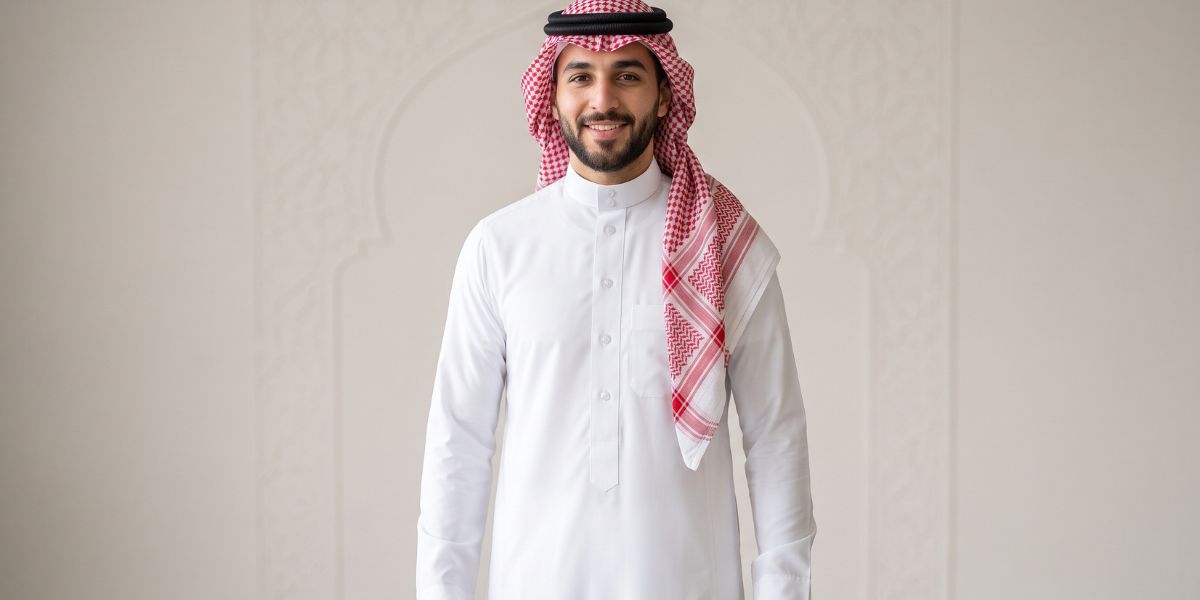
People call the thobe by different names depending on the country. In Saudi Arabia, it is often called a thawb. In the UAE, it is called a kandora. In Oman and some other Gulf states, it is called a dishdasha. These are regional names for the same basic garment.
The thobe is worn for daily life, work, prayer and special occasions like Eid. White is the most common colour. Men also wear darker thobes in cooler months. The fabric is usually cotton in summer and a heavier cotton or wool blend in winter.
Also Read: Complete Guide About Thobe, and it’s Styles
A jalabiya is a loose, ankle-length robe that started in Egypt and the Nile Valley. It is also spelled jallabiya or galabeya. The Egyptian accent turns the letter "j" into a "g" sound, which is why Egyptians say galabeya. In Sudan, Eritrea, and Ethiopia, similar garments are worn under the same family of names.
In Egypt, the jalabiya has long been worn by farming communities, known as fellahin. Fellahin simply means people who farm the land. Both men and women wore the jalabiya for everyday outdoor wear, since it is light, airy, and easy to move in.
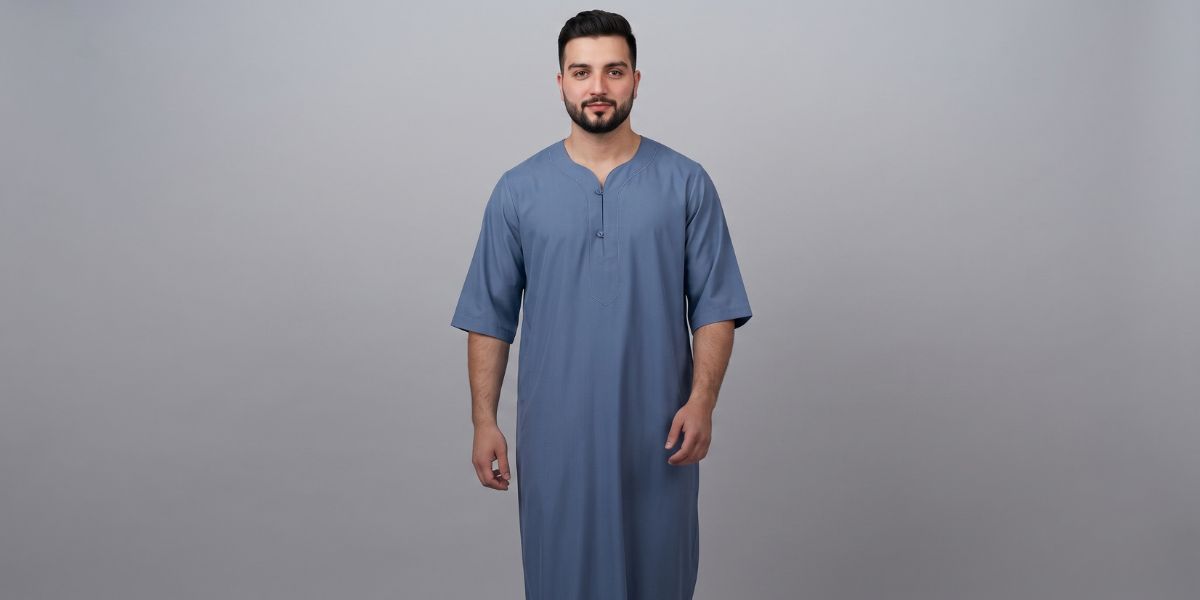
The cut of a jalabiya is simpler than a thobe. It has wide half sleeves, a round or V-shaped neckline, and no hood. Some versions have a small pocket sewn into the side seam. The fit is looser throughout the body than that of a thobe, which allows more room to move.
The meaning of jalabiya shifts once you move from Egypt to the Gulf. In the UAE and Saudi Arabia, the word jalabiya is mostly linked to women. It usually means a loose house dress rather than outdoor clothing.
Many women in these countries keep a few jalabiyas at home just for resting or sleeping. After a long day, they change out of their daily clothes into a jalabiya. It is soft, lightweight, and easy to move in, making it a comfortable choice for the evening.
This differs from how the garment is worn in Egypt, where both men and women wear it outdoors as everyday clothing, not only at home. When someone in Dubai or Riyadh says "jalabiya," they usually mean a comfortable home dress worn by both men and women. When someone in Cairo says jalabiya, they usually mean an outdoor garment worn by the whole family.
Some Gulf jalabiyas are also dressed up a little for Ramadan evenings or small family gatherings at home, with light embroidery on the neckline or sleeves. The everyday version stays simple and made for comfort.
A djellaba is a loose robe originating in Morocco and also worn in Algeria and Tunisia. Its most obvious feature is the hood, which sits at the back of the neck and can be pulled up for warmth or shade. Sometimes there is no hood present, but you will see embroidery around the neck and sleeves.

The djellaba is worn by both men and women, though the cut and decoration differ between the two. Men's djellabas are usually plainer. Women's versions often have more embroidery around the collar, cuffs, and front opening. It comes in both half-sleeve and full-sleeve versions.
Wool is a common fabric for winter djellabas, since Morocco has cooler weather in the mountains and at night. Lighter cotton versions are worn in summer. The djellaba is worn for daily life across Morocco, and dressier versions are worn for weddings, Eid, and other gatherings.
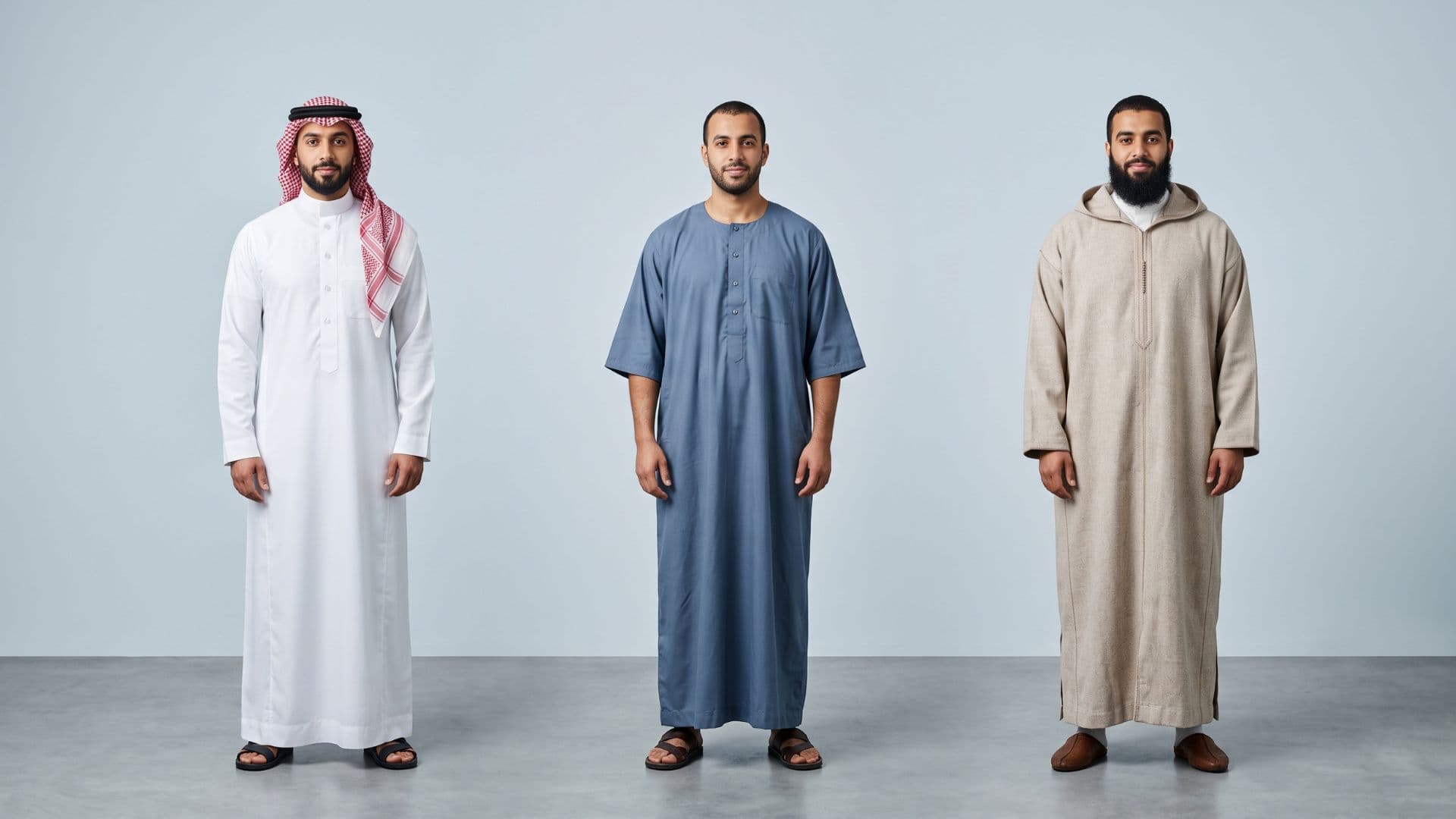
If you place a thobe, a jalabiya, and a djellaba side by side, the easiest way to tell them apart is the hood, embroidery, and the fit.
The neckline is another clue. A thobe usually has a collar, similar to a shirt collar. A jalabiya usually has a simple round or V-neckline with no collar. A djellaba often has a plain front opening with buttons or a tie, plus the hood attached at the back.
All three garments are long, loose, and modest. This is why they get confused so easily. They also come from neighbouring regions that share the Arabic language and similar styles of dress, so the names sometimes overlap in everyday speech.
Online stores add to the confusion too. Some shops use the terms thobe, jalabiya, and djellaba interchangeably on the same product, just to capture more searches. This makes it harder for shoppers to know what they are actually buying.
The clearest way to avoid mixing them up is to remember three simple points. Only a djellaba has a hood. A thobe has the most structured, fitted shape. A jalabiya is the loosest of the three, without a hood, and in the Gulf it usually refers to home wear rather than something worn outdoors.
Think about where you are, what you are doing, and how you plan to wear it.
No. A jalabiya has a looser, simpler cut with no collar and half sleeves, while a thobe may or may not have a collar. A thobe is more structured and usually has a button placket. In the UAE and Saudi Arabia, men’s jalabiya is worn for sleep.
No. A djellaba has a hood and comes from Morocco. A jalabiya has no hood and comes from Egypt and the Nile Valley.
Because it is light, soft, and loose, it is comfortable for resting and sleeping after a long day. Many women change into it once they get home.
Yes. In Egypt, Sudan, the UAE, and Saudi Arabia, men have worn the jalabiya for generations. In the Gulf, men more commonly wear a thobe, dishdasha or kandora instead.