Zia Randhawa - Knowledge Curator
Zia Randhawa serves as the Knowledge Curator for Shabab Al Yola. He has a strong background in fashion history with a keen eye for modern trends. Zia conducts in-depth research on global thobe styles, fabric innovations, and market shifts. His work bridges the gap between traditional modesty and contemporary fashion to provide readers with data-backed insights and style guides.
Yes, non-Muslims can wear a thobe. A thobe is the long, loose, ankle-length robe worn across the Arab world. The garment started as practical desert clothing centuries before Islam began, not a uniform built for one religion. Expats, tourists, and even non-Muslim athletes wear a thobe today.
Islamic teaching places no restriction on this. Scholars treat clothing as either a religious symbol or a local custom, and a thobe falls under local custom. Wearing one carries no religious weight, the same way a Western suit carries no religious weight for a Muslim man.
This view rests on a basic principle in Islamic jurisprudence. Clothing tied to local custom, rather than to a single religion's identity, remains open to anyone to wear. Scholars point to a hadith narrated by Al Mughirah ibn Shu'bah, who reported that Prophet Muhammad once wore a tight-sleeved jubbah of Roman design.
A jubbah/thobe is a long, open-front overgarment with wide sleeves, an older relative of today's thobe. The Prophet wearing a foreign-style garment shows that the cut of a robe carries no religious weight on its own. A thobe does not turn into a religious symbol just because Muslim men wear it most often.
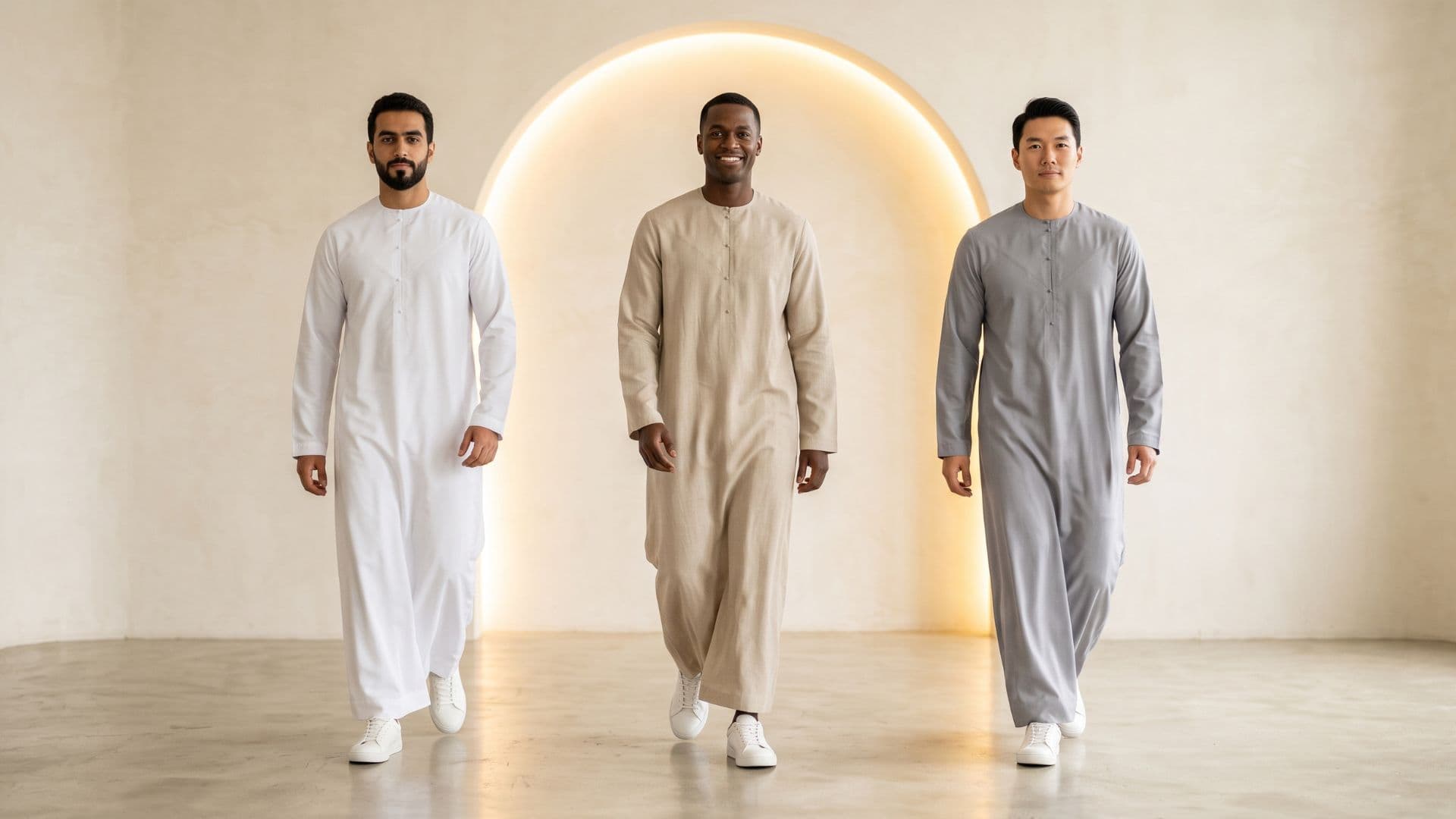
Yes, a white person can wear a thobe. A thobe is a style of clothing, not a marker tied to race. Arab, South Asian, African, and Southeast Asian Muslims all wear thobe-style robes today, so the garment was never limited to one ethnic group.
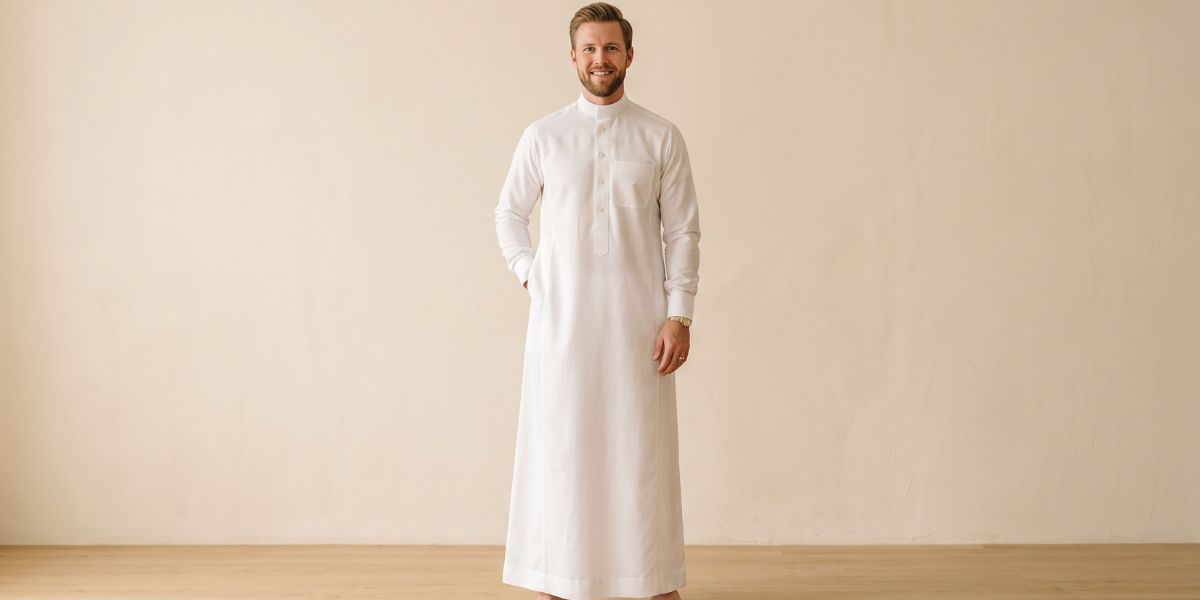
Race and religion are two separate questions here, and neither restricts the thobe by law or custom. Arab identity itself describes a shared language and culture, not a single race, since Arab populations span many skin tones and ancestries across North Africa and the Middle East.
A white tourist, diplomat, or convert faces the same guidance as any other wearer. Pick a well-made thobe, wear it with care, and treat it as the everyday or formal clothing it actually is, not as a costume tied to skin color.
A thobe is a cultural garment, not a strictly religious one. Long, loose thobes covered men and women across Arabia centuries before the 7th century, when Islam began. Islam later praised modesty and simple dress, but never made one specific cut of robe mandatory.
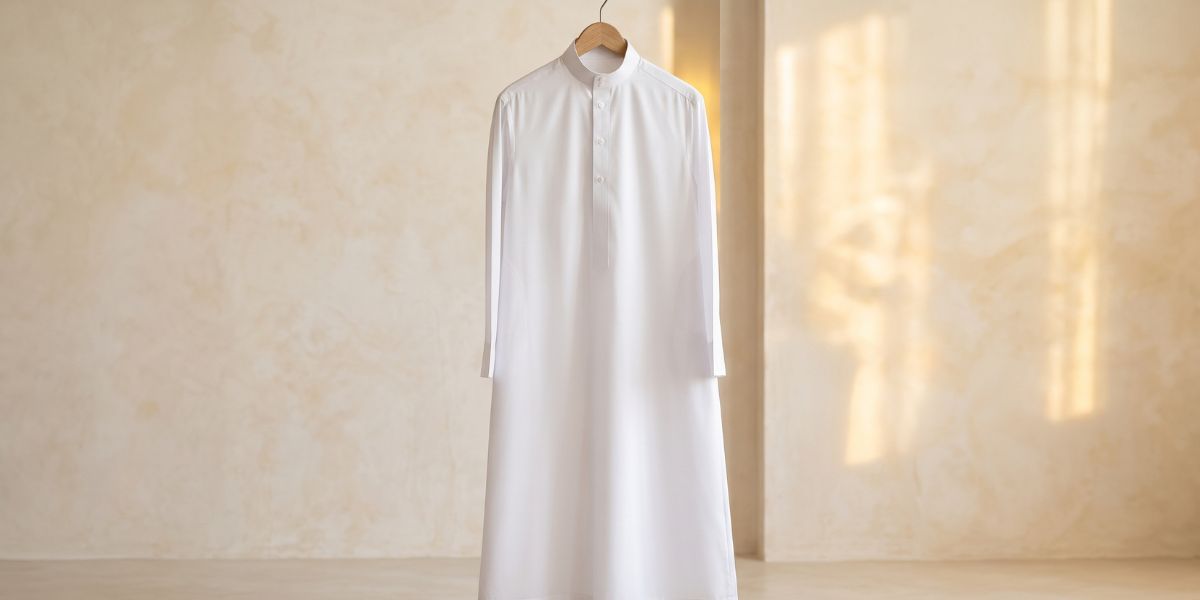
Historians trace the thobe back to pre-Islamic Arabia. Men and women both wore loose, lightweight garments made from cotton, linen, or wool. The desert climate demanded clothing that allowed air to circulate around the body and kept the sun and sand off the skin.
Islam kept this practical style after it arrived. The Prophet Muhammad preferred a long shirt, called a qamis, over other garments, according to a report from his wife, Umm Salamah. A qamis is a loose, long-sleeved shirt that reaches near the ankles, closely resembling the modern thobe. This preference made the garment popular among Muslims. The garment itself stayed a regional style rather than a religious uniform.
Yes, a thobe or jubba is welcome across the Muslim world, though the local norm changes by region. Gulf countries like Saudi Arabia, the UAE, and Oman treat the thobe as everyday dress, so wearing one there fits right in.
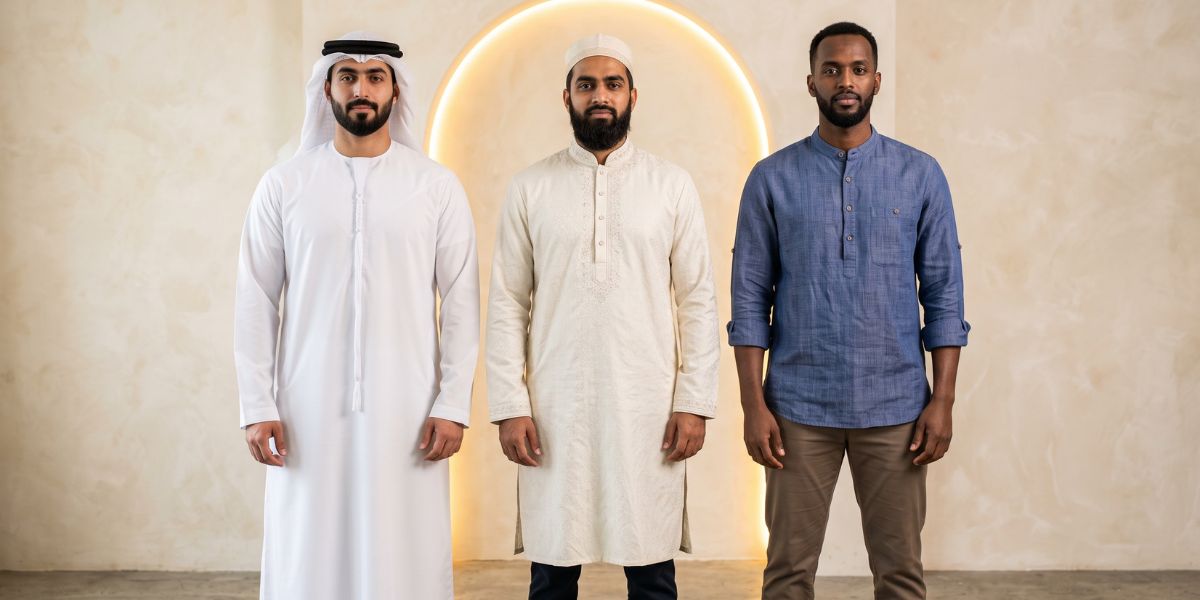
South Asian countries such as Pakistan and Bangladesh favor the kurta over the Gulf-style thobe, while Indonesia and Malaysia lean toward the baju melayu or koko shirt for daily wear. A thobe still works fine as formal or religious attire in these regions. No Muslim country bans the garment.
The thobe goes by different names in different regions. Saudi Arabia and the Levant call it a thobe. The UAE and Oman call it a dishdasha or kandura. Morocco calls a similar robe a djellaba, and South Asia calls a related garment a kurta.
Each region adjusts the collar, sleeve, and cut to match local taste and climate. A Kuwaiti dishdasha carries a stiff collar and no front buttons. An Omani dishdasha adds a tassel at the right side of the neckline called a furakha. A Moroccan djellaba adds a pointed hood and a looser cut for layering in cooler weather.
Region | Common Name |
Saudi Arabia, Levant, Qatar | Thobe |
UAE | Kandura |
Oman, Kuwait | Dishdasha |
Egypt, Sudan | Jalabiya |
Morocco | Djellaba |
South Asia | Jubba |
Our guides cover different thobe styles. Another article describes the difference between Thobe, Jalabiya, and Djellaba, so you don’t get confused while choosing one.
Yes, many non-Muslims wear a thobe on a regular basis. Foreign workers, diplomats, and tourists across the six Gulf countries, Saudi Arabia, the UAE, Qatar, Kuwait, Oman, and Bahrain, choose a thobe for work, comfort, and daily errands.
These six nations form the Gulf Cooperation Council (GCC), a regional body established in 1981. Office workers from Western and Asian countries often switch to a thobe after a short stay in the region. Summer temperatures regularly pass 40 degrees Celsius across the Gulf, and the loose cut moves air around the body better than fitted Western clothing does.
Hotel staff, business consultants, and university lecturers wear a thobe as standard daily clothing in many Gulf cities. Local communities generally welcome this choice. Wearing the local dress signals respect for the culture, not disregard for it.
Yes, footballer Lionel Messi wore one at the 2022 World Cup. Qatar's Emir Sheikh Tamim bin Hamad Al Thani placed a bisht, a ceremonial cloak worn over a thobe, on Messi's shoulders before the trophy lift on December 18, 2022.
A bisht is a separate but related garment. It is an open cloak made from light wool or silk, worn over a thobe at formal events such as weddings and state ceremonies. Messi, an Argentine footballer raised in the Catholic faith, kept the gold-trimmed black bisht on for the trophy photos at Lusail Stadium. Some Western commentators criticized the moment. Qatari officials described it as a high honor reserved for respected guests. The event carries the same principle that applies to the thobe itself. Gulf hosts extend their traditional dress to non-Muslim guests as a mark of welcome, not as a religious gesture.
Wearing a thobe becomes disrespectful when it turns into a costume or a joke. Treating the garment as a Halloween outfit, pairing it with an exaggerated accent, or mocking the people who wear it daily crosses the line from appreciation to mockery.
A costume party setting strips the garment of its everyday meaning and turns it into a punchline. Cheap, poorly made thobes sold online under labels like Arab costume add to this problem. Local communities across the Gulf and the Levant generally welcome a non-Muslim wearing a real, well-made thobe in daily life or at a cultural event. The same communities react badly to a thin, mass-produced imitation worn for laughs at a party. The difference is in the intent and quality, not in the wearer's religion.
Wear a thobe the same way a local wearer would. Pick a clean, well-fitting thobe in a plain color for daily wear. Add a simple undershirt and loose trousers underneath. Save heavily embroidered or formal styles for occasions when local hosts would also wear them.
A few habits separate a respectful wearer from a careless one.
A plain white or neutral-colored daily thobe works best for a first purchase. This style matches everyday wear across the Gulf, costs less than embroidered or formal versions, and gives a new wearer room to learn proper fit before trying other styles.
A simple silk-cotton thobe in white, beige, or grey suits most climates and most occasions. Buyers planning to attend a wedding or a formal event can add a bisht later, once they understand local norms around when to wear one.
Shabab Al Yola sells authentic thobes and ships them worldwide. The brand delivers across Europe, the Americas, Australia, UK, Asia, the Middle East, and beyond, so a non-Muslim buyer almost anywhere in the world can order a real, well-made thobe.
A buyer gains more from an authentic thobe than from a costume-grade copy, since the fabric, stitching, and cut decide how the thobe sits and how long it lasts. Shabab Al Yola ships to customers across these regions, which means a first-time buyer outside the Middle East does not need to track down a local store to start wearing one. You can browse the Shabab Al Yola collection and place an order from anywhere in the world.