Imtiaz Ahmed - Head of Tailoring Team
Mr. Imtiaz Ahmed is working as a head of tailoring department at Shabab Al Yola. Over nearly two decades, he has worked with local clients across the Gulf and international customers who expect Gulf-standard tailoring delivered to their door. His hands-on experience covers every major regional style, including Emirati, Saudi, Qatari, Kuwaiti, and Omani cuts, along with the fine details that separate a well-made thobe from a great one. At Shahbab Al Yola, Imtiaz personally oversees the construction of every regional silhouette the brand produces. He knows Gulf garment-making inside out and brings that knowledge into every piece the brand produces.
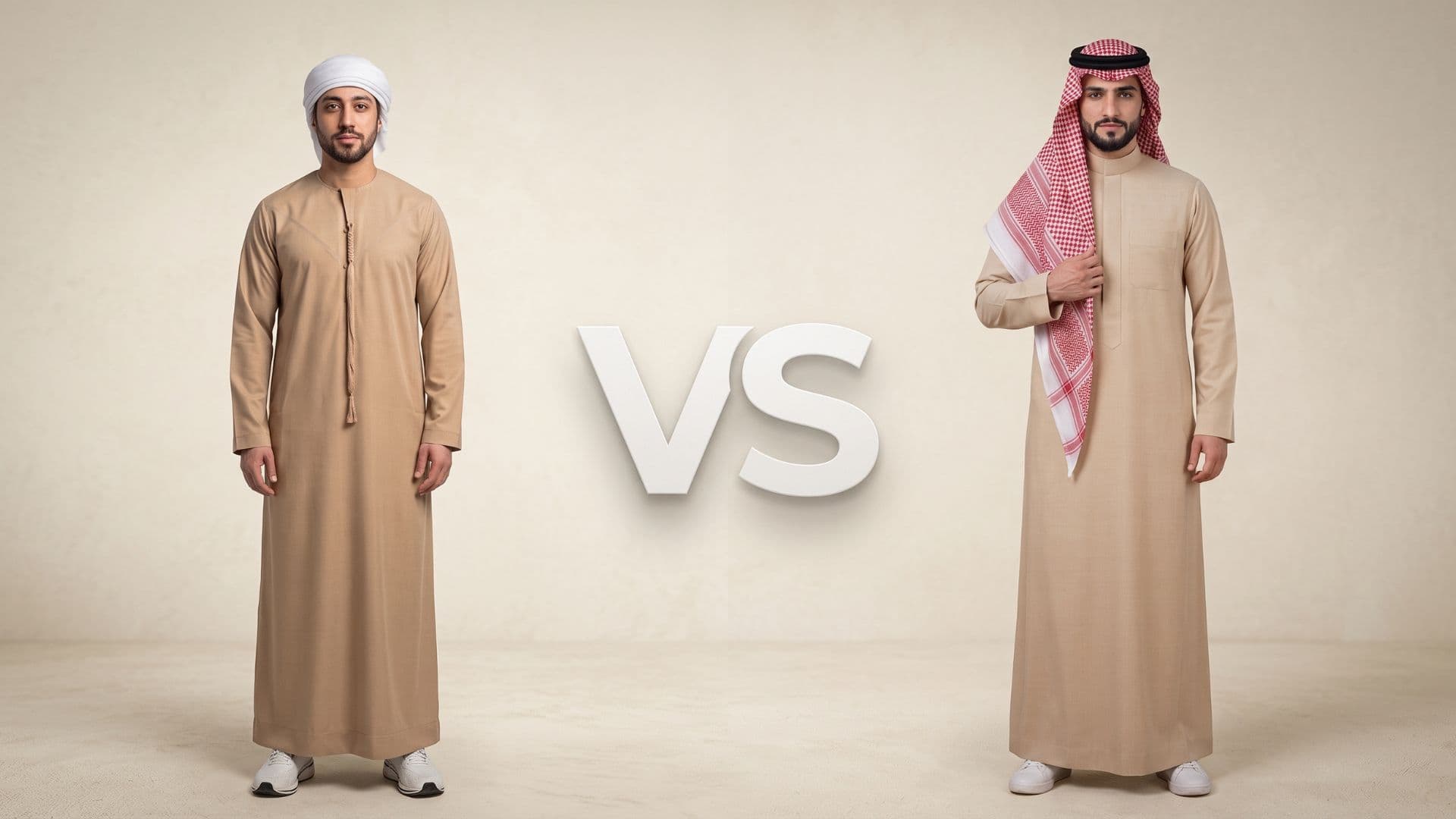
You have ever seen photos from Saudi Arabia or the UAE, you have noticed men wearing long white thobe. these thobes look identical but if you ask a Saudi man or an Emirati man, they will quickly point out the differences. The collar, the fabric, the headwear and even the length tell a completely different story. I will guide you through every detail and by the end you will know exactly how to tell the two apart.

A thobe is a long ankle length robe worn by men. It has long sleeves and covers the full body. Saudi Arabia uses the word thobe. The UAE uses the word kandora for a very similar garment. Some people use both words to describe the same thing. But the two garments have clear design differences based on where they come from.
Other Gulf countries also have their own names. Kuwaiti people and Omani people call it a Kuwaiti dishdasha and Omani dishdasha respectively. Bahrain and Qatar also use the word thobe. All of these are long robes. All are modest. All work well in hot climates. But each country has its own unique design details.
Features | Saudi Thobe | Emirati Kandura |
Common Name | Thobe | Kandora |
Tassel | None | Thin white tassel at neckline |
Button Placket | Long placket with multiple buttons | Shorter placket |
Cuff Style | Button cuffs or French cuffs for formal wear | Wide and relaxed cuffs |
Length | At ankle, sometimes slightly above | Sits at ankle |
Headwear | White ghutra or red and white shemagh with agal | White ghutra with Emirati fold style and agal |
The Saudi thobe is known for it's comfortable fit that suits both everyday wear and formal occasions.
The Saudi thobe usually features a band collar, which is also known as a Mandarin collar or stand collar. A band collar is a short upright collar that wraps around the neck.
The collar is usually 2.5 to 4 centimeters high and includes interfacing, which is an inner fabric layer that helps it keep its shape. It fastens with one or two buttons at the front. Below the collar, a placket, which is the strip of fabric that holds the buttons, extends down the chest. The Saudi thobe placket is longer than most other Gulf styles.

The sleeves are long and straight. Most Saudi thobes have a simple open sleeve. the sleeves hang freely at the wrist instead of sitting tight. Many people prefer open sleeves because it offers easy movement and it also give the thobe a simple traditional apperance.

White is the most popular color for daily and summer wear. In winter some men wear thobes in light grey, cream or beige. Dark colors like navy or dark blue appear occasionally but white stays the most common choice across all seasons.

The Saudi thobe and the Emirati kandora are available in a wide range of fabrics for different seasons and personal preferences. For summer, common choices include polyester, spun polyester, poly cotton, and polyester viscose, which are popular for everyday wear. For winter, we import wool fabrics from Britain, India, China, Korea, and Australia because they provide extra warmth. Premium collections use Semeramis fabric, which is suitable for both summer and winter, along with premium polyester.
The thobe sits right at the ankle. Many religious Saudi men prefer the hem to sit slightly above the ankle. This follows Islamic guidance about keeping clothing at a modest length.
Saudi men wear a shemagh on the head. A shemagh is a square cloth placed over the head. It can be checked white or red and white. both checked version is called a shemagh. Both are held in place with a black cord called an agal.

The Emirati Kandora has the following main features that everybody should know:
The Emirati kandora is collarless. Some Emirati men wear a thin inner shirt under the kandora. This inner shirt is called a wazara. A wazara is a lightweight cotton undershirt that adds comfort and structure underneath the thobe.

One of the most recognizable features of the Emirati kandora is a thin tassel at the neckline. This small rope like detail hangs loosely from the front collar area. It is usually white. Not every kandora has this tassel but it is widely seen and considered a traditional Emirati detail.

The sleeves are long. The cuffs are wider and more relaxed. The overall silhouette at the sleeve end is looser. This gives a free flowing appearance.

White is almost always the color of choice. Emirati men are known for wearing very bright, crisp white. The brightness and crispness of the white is a point of personal pride. Colored kandoras also exist but white is the clear favorite for daily and formal wear.
The Emirati kandora comes in a variety of fabrics to match different weather conditions and budgets. For summer, common options include polyester, spun polyester, poly cotton, and polyester viscose, which are widely chosen for everyday wear. During winter, many people wear imported wool fabrics to add warmth.
The kandora is worn at the ankle. Unlike the Saudi style, wearing it above the ankle is not common practice in the UAE.
Emirati men wear a plain white ghutra. The Emirati ghutra is folded in a specific way that creates a slightly pointed shape at the front of the head. This folding style is very characteristic of Emirati dress and is different from how Saudi men wear the shemagh.

Both the Saudi thobe and the Emirati kandora are traditional garments that hold an important place in Gulf culture.
The Saudi thobe is worn at every level of society. You will see it in offices, in mosques, in shopping malls and at family dinners. White color links to simplicity and cleanliness. The thobe is so deeply connected to Saudi identity that it appears in official government portraits and national celebrations.
In the UAE the kandora is a symbol of national pride. The government promotes it in official settings. The bright white and sharp crispness of the fabric says a lot about personal presentation. There is even a tradition of gifting a high quality kandora to someone as a gesture of respect.
Yes you can. But people will notice the difference. If you wear a Saudi thobe in the UAE, the collar style and shemagh detail will stand out. If you wear an Emirati kandora in Saudi Arabia, the tassel and the ghutra folding style will look different.
You can fit in locally, wearing the local style is the better choice. If you want to represent your own background, wearing your home style is also perfectly fine. The most important thing in either country is to wear the thobe clean, well pressed and with good posture.

When it comes to buying a quality thobe, finding the right one matters a lot. At Shabab Al Yola we make that easy for you. We offer a great selection of thobes made with premium fabrics and precise stitching.
Whether you’re in London, Dubai, or Riyadh, we believe dressing with confidence and tradition should never be a compromise. We’ve put together a lovely collection of premium Kandora and Thobes created with the softest fabrics, perfectly fitting, and that authentic Gulf grace you will truly enjoy.
Whether you want a simple daily thobe for regular wear or a formal thobe for special occasions, you will find exactly what you are looking for. Explore our collection at shababalyola.ae and enjoy high quality authentic styles delivered straight to your door.
1- What is the biggest difference between a Saudi Thobe and an Emirati Kandora?
The biggest visual difference is the collar and the neck tassel. The Saudi thobe has a banned collar. The Emirati kandora is collarless and often includes a thin tassel hanging from the neckline.
2- Is a thobe the same as a kandora?
They are very similar garments. Thobe is the Saudi name. Kandora is the Emirati name. The design details are different between the two countries.
3- Why do Emirati men keep their kandora so white and crisp?
The brightness and crispness of the kandora is a mark of personal pride in UAE culture. Men use professional washing and starch techniques to keep the fabric looking sharp.
4- What headwear do Emirati men wear?
Emirati men wear a white ghutra. They fold it in a specific style that creates a slight point at the front. This is very different from the Saudi ghutra style.
5- Can a non-Arab wear a thobe or kandora?
Yes. Many people from different backgrounds wear these garments. Wearing them with respect and in a clean and proper way is the most important thing.