Imtiaz Ahmed - Head of Tailoring Team
Mr. Imtiaz Ahmed is working as a head of tailoring department at Shabab Al Yola. Over nearly two decades, he has worked with local clients across the Gulf and international customers who expect Gulf-standard tailoring delivered to their door. His hands-on experience covers every major regional style, including Emirati, Saudi, Qatari, Kuwaiti, and Omani cuts, along with the fine details that separate a well-made thobe from a great one. At Shahbab Al Yola, Imtiaz personally oversees the construction of every regional silhouette the brand produces. He knows Gulf garment-making inside out and brings that knowledge into every piece the brand produces.
If you have ever stood in a mosque on a Friday afternoon, attended an Eid gathering, or scrolled through modest menswear online, you have seen a thobe.
In this article, I will answer all your questions about the thobe. You will learn what the word thobe actually means, regional styles of thobes, what it is made from, how it should fit, and what to check before you buy one. This article focuses on everything you need to know about the thobe.
The word thobe comes from the Arabic word ثوب (thawb). In Arabic, thawb is a general term for clothing or garment. It is not originally a specific name for one type of robe. Over time, as this style of long, loose robe became the standard form of dress across the Arabian Peninsula, the word thawb narrowed in everyday use to refer specifically to this garment.
This is why you will see the word spelled in several ways in English, including thobe, thawb, thoub, and thaub. All of these spellings point to the same Arabic root and the same garment. The spelling "thobe" has become the most common version used in English-language writing and online searches, so that is the spelling used throughout this article.
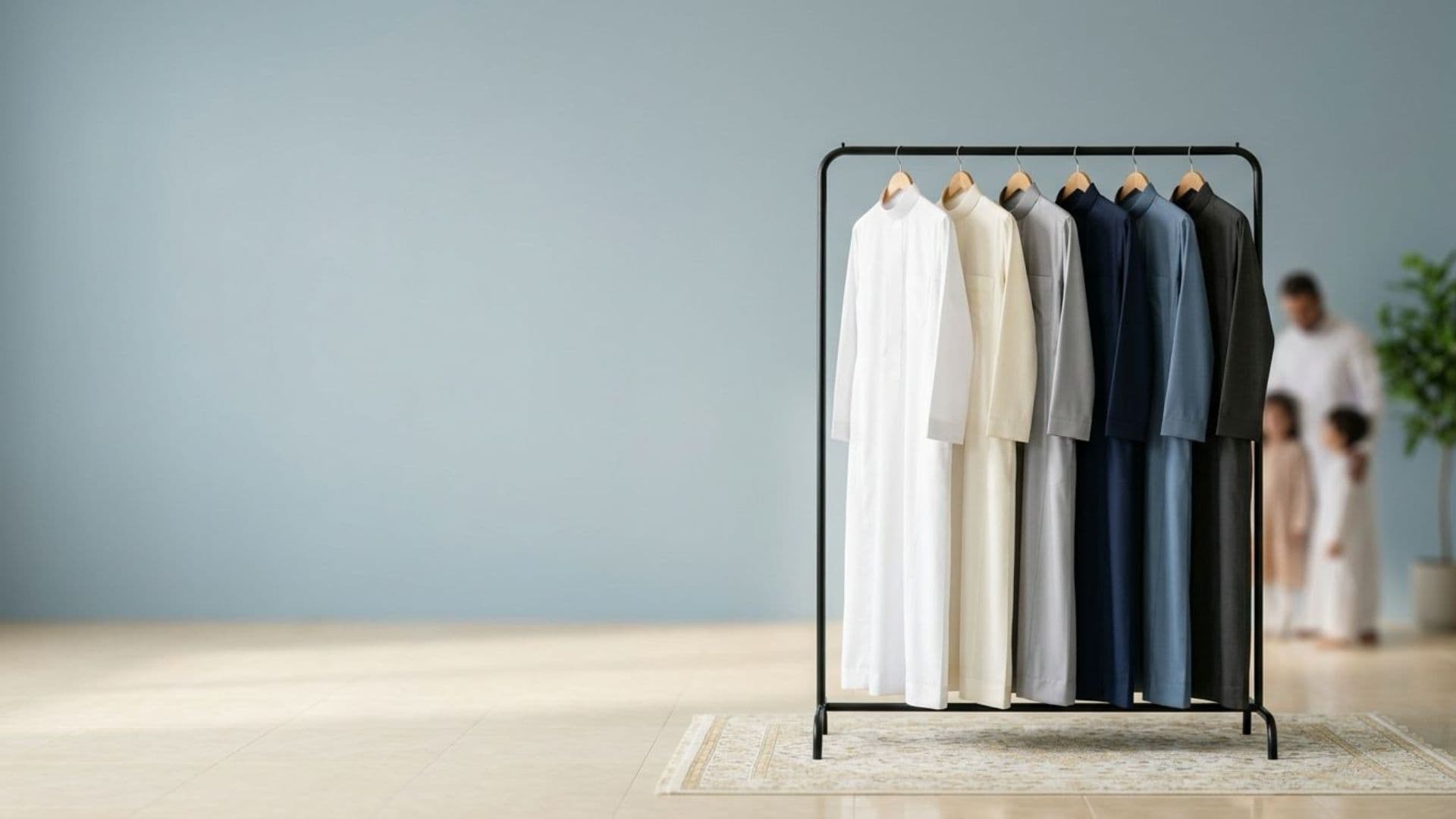
A thobe is a long, loose-fitting robe worn by men, typically reaching the ankles. It has long sleeves, a front opening that usually closes with buttons, and a collar that can range from a simple round neck to a structured stand-up collar depending on the regional style.
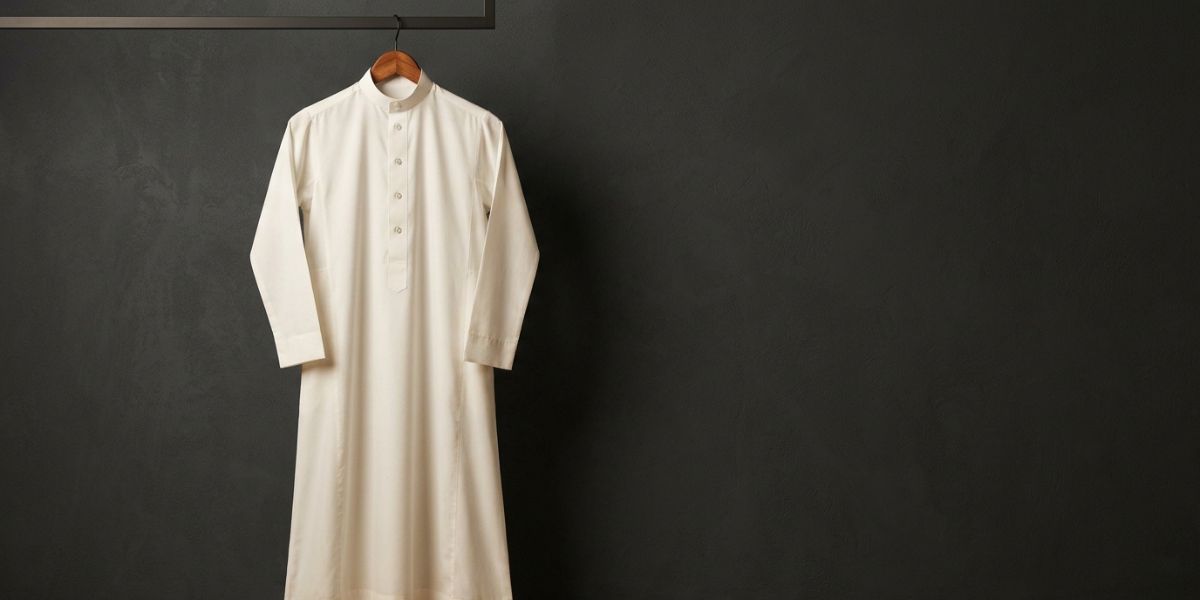
The garment is designed around modest dress principles. It covers the body fully from the shoulders down without clinging to the shape underneath. Most thobes are made from cotton or cotton blends, which help the body stay cool in warm climates while still providing full coverage.
A thobe is worn as a complete outfit on its own, unlike a kurta or a shirt, which are paired with separate trousers. This is one of the features that makes the thobe distinct from many other traditional garments around the world.
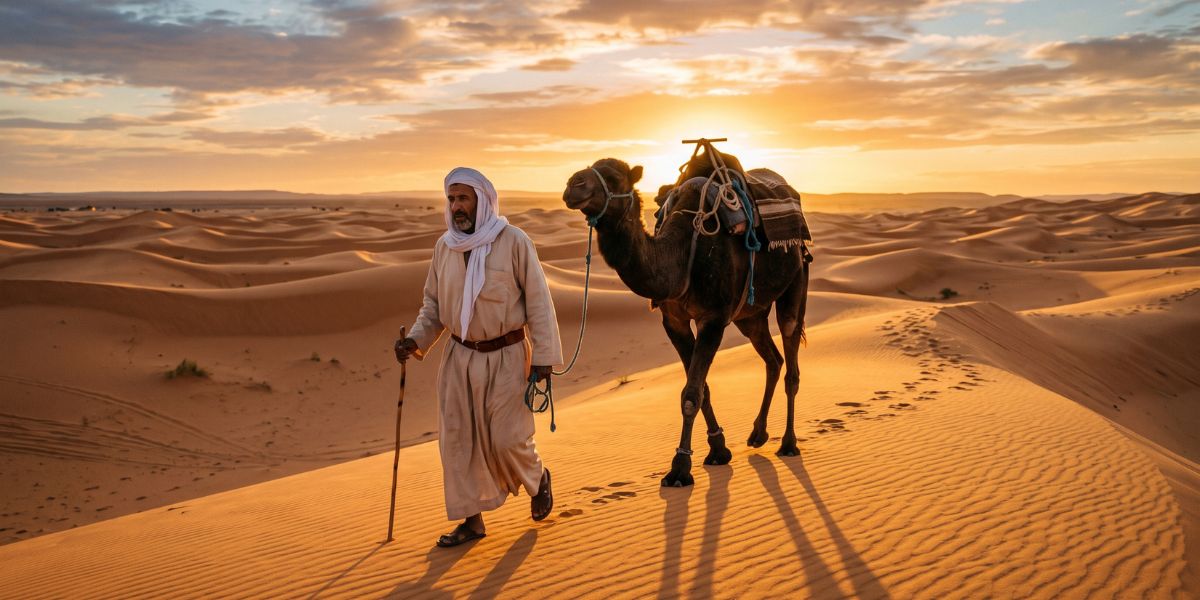
Long, loose robes were worn across the Arabian Peninsula long before the rise of Islam. The desert climate made this style of dress a practical choice. A loose robe allows air to move freely around the body, which helps with cooling, while the full coverage protects the skin from direct sun exposure during the day and from cold temperatures at night.
Also Read: Detailed History of Thobe
When Islam spread across the region, modesty in dress became a core value tied to faith. The robe that was already common in daily life took on additional meaning as a garment associated with simplicity and dignity. The Prophet Muhammad is reported to have worn simple, often white, garments and to have encouraged cleanliness and modesty in dress.
One hadith on this topic, narrated by Ibn Abbas and recorded in Sunan Abi Dawud and Sunan At-Tirmidhi, states the following.
Wear white clothes, for they are among the best of your clothes, and shroud your dead in them.
This hadith is one of the reasons white has remained the most common and most respected color for a thobe across many parts of the Muslim world, particularly for religious occasions.
As Islam spread into new regions over the following centuries, local communities adapted the basic robe to their own climates, fabrics, and tailoring traditions. This is how a single foundational garment grew into a wide family of regional styles that share the same root idea yet look quite different from one another today.
Understanding the components of a thobe makes it much easier to assess quality and choose the right fit. Here are the main construction elements found on most thobes.
The fabric of a thobe affects how it feels, how it drapes, and how well it holds up over the years.
One term worth knowing when shopping is GSM, which stands for grams per square meter. GSM is a standard measurement of fabric weight, calculated by weighing one square meter of the material.
Checking the GSM of a fabric, when it is listed, gives you a much clearer idea of how the garment will actually feel.
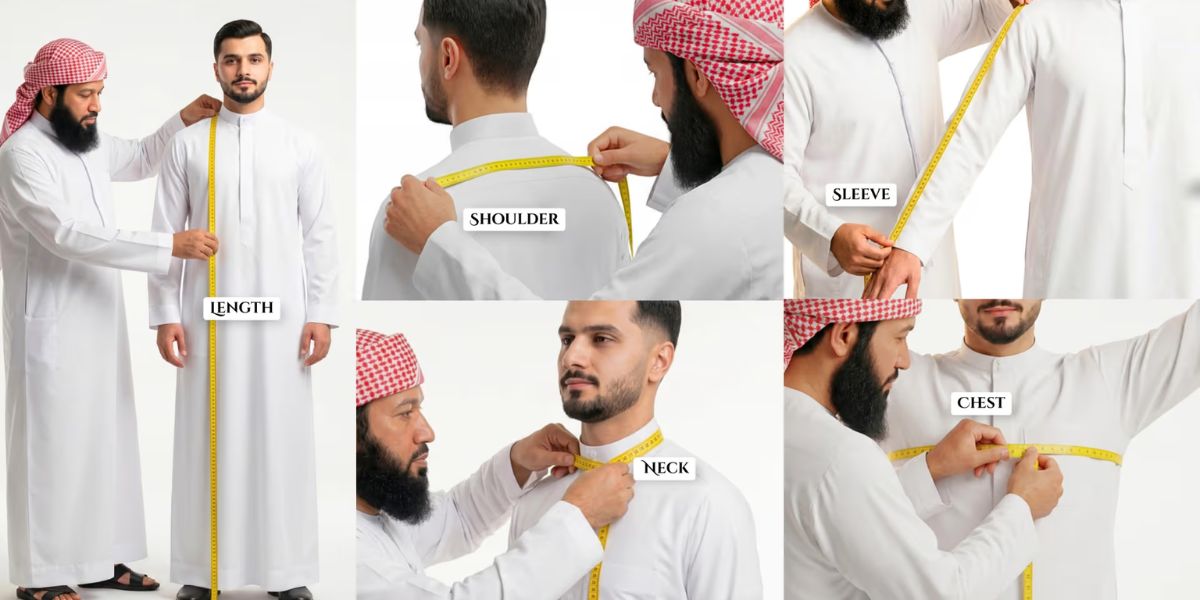
Getting the length and fit right makes a real difference in how comfortable and presentable a thobe looks.
If you are ordering online and are unsure about your measurements, you can read our guide to taking thobe measurements at home.
Once the thobe spread beyond the Arabian Peninsula, each region shaped it around local climate, fabric availability, and tailoring traditions. The Gulf countries developed their own distinct versions, including the structured Saudi thobe, elegant Qatari thobe, classic Kuwaiti thobe, traditonal omani thobe, and the more relaxed Emirati kandura. North Africa produced the hooded Moroccan djellaba and the embroidered Tunisian jebba. East Africa, the Levant, Yemen, and South Asia each developed their own recognizable versions, from the Egyptian galabeya to the South Asian jubba.
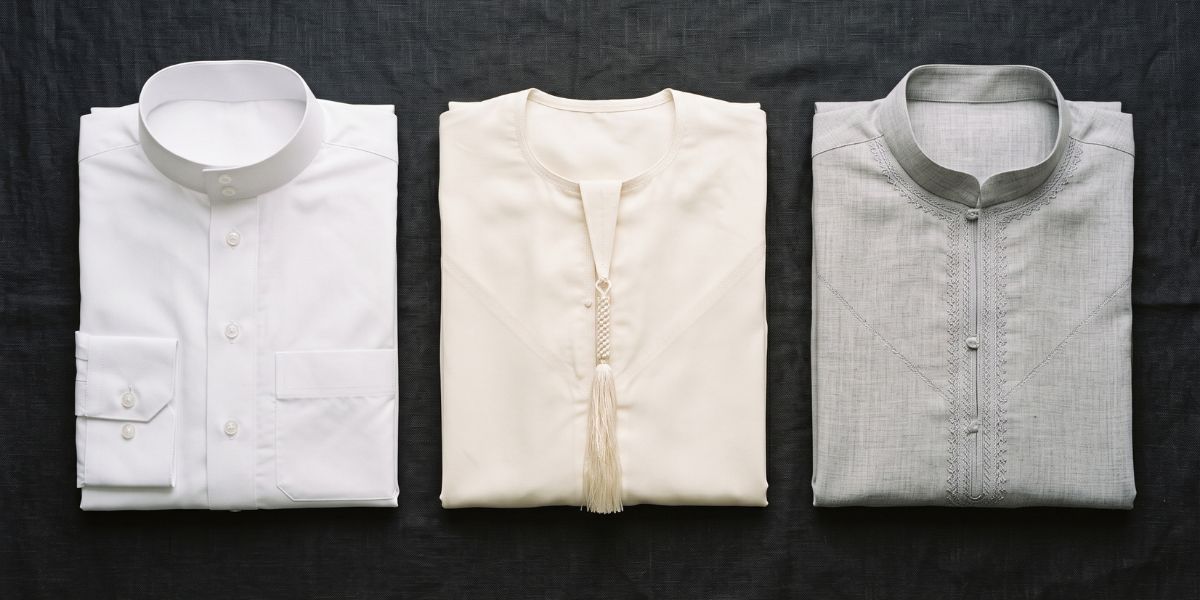
Covering the full detail of each one properly, including collar types, fabric choices, and the cultural accessories worn alongside them, takes real space to do well. Our complete guide on thobe styles around the world breaks down every major regional style in full detail, so if you want to go deeper into a specific country or style, that guide is the place to go.
The thobe works for far more occasions than many people realize.
A thobe is everyday and occasion clothing in the standard sense, with a tailored shape, sleeves, and a collar. An ihram is a completely different garment, consisting of two simple, unstitched pieces of white cloth worn specifically by men during the Hajj and Umrah.
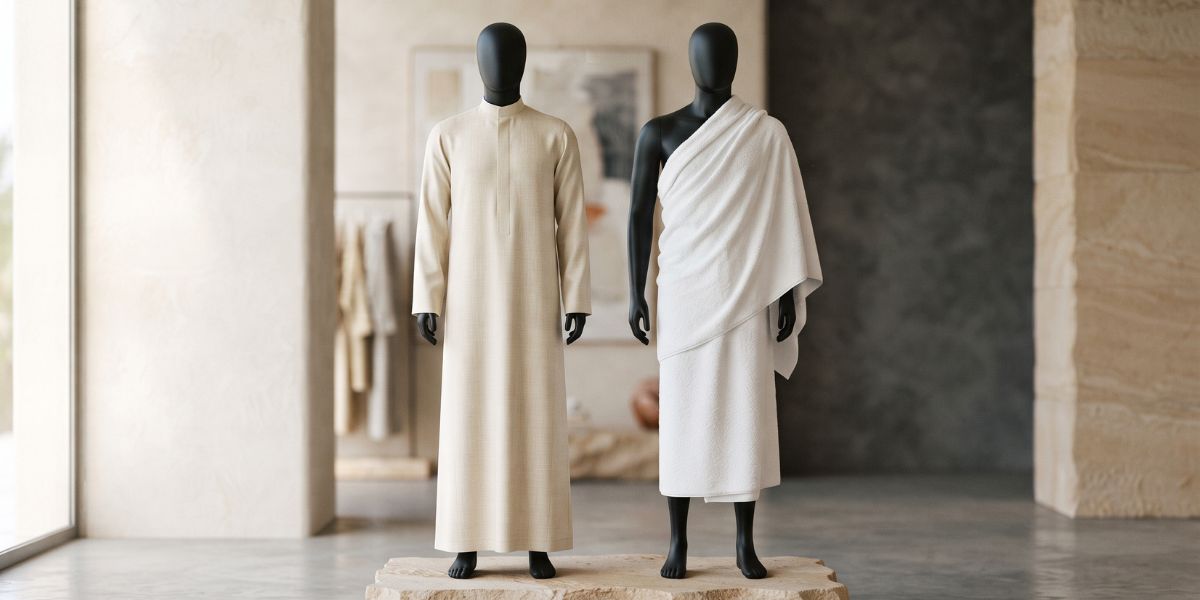
There is no fixed age requirement. Many families introduce a child's first thobe around the time the child begins to join family prayers or to attend the mosque regularly, which often falls in early to middle childhood, though this varies widely by family and culture.
A few practical checks will tell you a lot about the quality of a thobe before you commit to buying it.
A thobe is far more than a long white robe. It carries a real linguistic history rooted in the Arabic word thawb, a development shaped by centuries of desert life and Islamic values around modesty, and a structure that varies in collar, fabric, and fit depending on where it comes from.
Knowing the difference between a thobe, a jubba, a kandura, and a dishdasha helps you understand what you are actually looking at and buying. Knowing how to check stitching, fabric weight, and fit helps you choose a piece that will actually serve you well for years. And knowing the religious and cultural context behind the garment helps you wear it with a fuller understanding of what it represents.