Imtiaz Ahmed - Head of Tailoring Team
Mr. Imtiaz Ahmed is working as a head of tailoring department at Shabab Al Yola. Over nearly two decades, he has worked with local clients across the Gulf and international customers who expect Gulf-standard tailoring delivered to their door. His hands-on experience covers every major regional style, including Emirati, Saudi, Qatari, Kuwaiti, and Omani cuts, along with the fine details that separate a well-made thobe from a great one. At Shahbab Al Yola, Imtiaz personally oversees the construction of every regional silhouette the brand produces. He knows Gulf garment-making inside out and brings that knowledge into every piece the brand produces.
If you have ever visited a clothing website and wondered why four names seem to describe the same long white robe, you are not alone. The thobe, jubba, dishdasha, and kandura are all traditional men's garments worn by Muslim and Arab men worldwide. They look similar to the normal person, but each has its own story, its own region, and its own set of details that make it instantly recognizable to those who wear it.
In this article, I will clearly break down all the differences. By the time you finish reading, you will know exactly what separates a thobe from a kandura, why a jubba is not the same as a dishdasha, and which style is the right pick for you in the UK.
Thobe, jubba, dishdasha, and kandura are all long robes worn by Muslim men. The names change by region. The design details (collar, cuffs, tassel, fit) change by country. Thobe is the broadest term. Jubba is popular in South Asia and Turkey. Dishdasha is the name used in Kuwait, Oman, and Iraq. Kandura is the national dress of Emirati men in the UAE.
A thobe, also written as thawb, is a full-length, ankle-length robe worn by men. In Arabic, the word thawb simply means 'garment' or 'clothing'. Over centuries, the term became associated with this specific style of long robe.
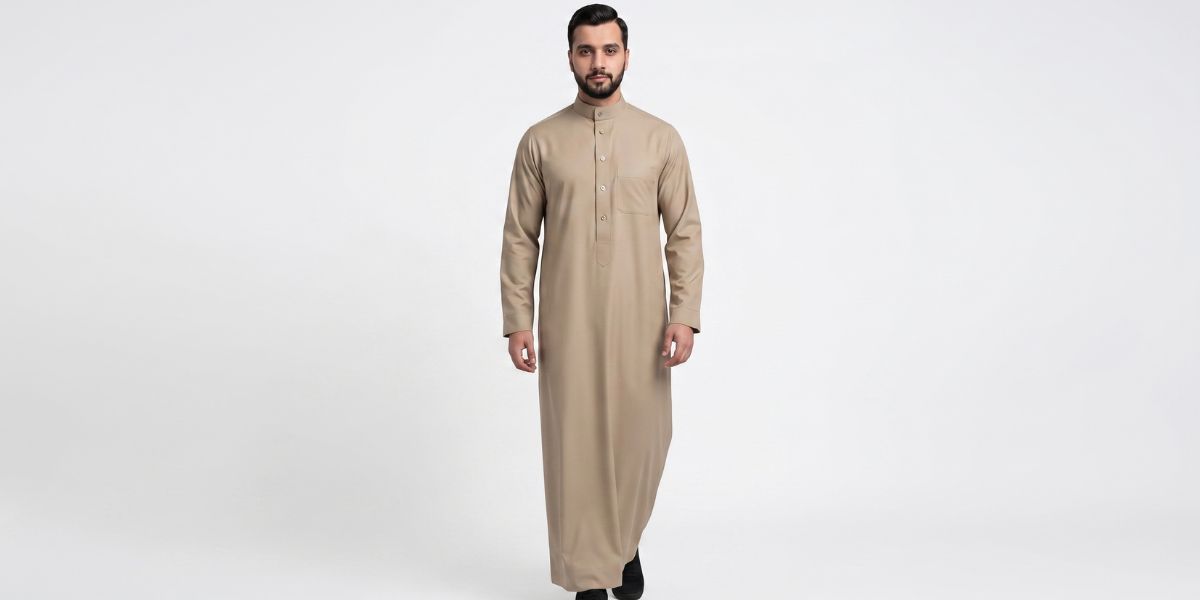
The thobe is the most widely used term across the Arab world and among Muslim communities globally. It is what most people in the UK will call this type of garment, regardless of its regional cut. Saudi Arabia is the country most associated with the thobe internationally, and the Saudi-style thobe is the most commonly seen design in UK Islamic clothing shops.
Saudi Arabia: Thawb or Thobe | Qatar: Thobe or Tobe | UAE: Kandora or Kandura | Sudan: Jallabiyya (different style, but related) | North Africa: Djellaba or Gandoura (distinct from Gulf styles) | UK and Europe: Thobe is the most widely used name.
Read Complete Guide Here: What is Thobe? Detailed Explanation
The jubba (also spelled juba or jubbah) is a long outer garment that covers the body from shoulders to ankles. The word comes from the Arabic jubbah, which historically referred to a padded garment worn in early Islamic civilization. Today, the jubba is popular across South Asia (Pakistan, India, Bangladesh), Turkey, and parts of North Africa, as well as widely worn in the UK.
When someone says the word “jubba”, they are mostly referring to the thobe or Kandura. Some people think that the jubba has no collar. The neck opening is round or V-shape without any raised band. The overall fit is looser and the sleeves are wider. Well, these all features match with Jalabiya. Jalabiya is a half sleeved, loose fit robe, UAE and KSA as a sleeping dress or in a relaxed setting.
Also Read: What is Jalabiya and How is it different from Thobe?
The dishdasha is the regional name for the long robe worn primarily in Kuwait, Oman, Iraq, and Bahrain. The word has Persian-Arabic roots. In these countries, dishdasha is the preferred term, and wearing one is tied to national identity.
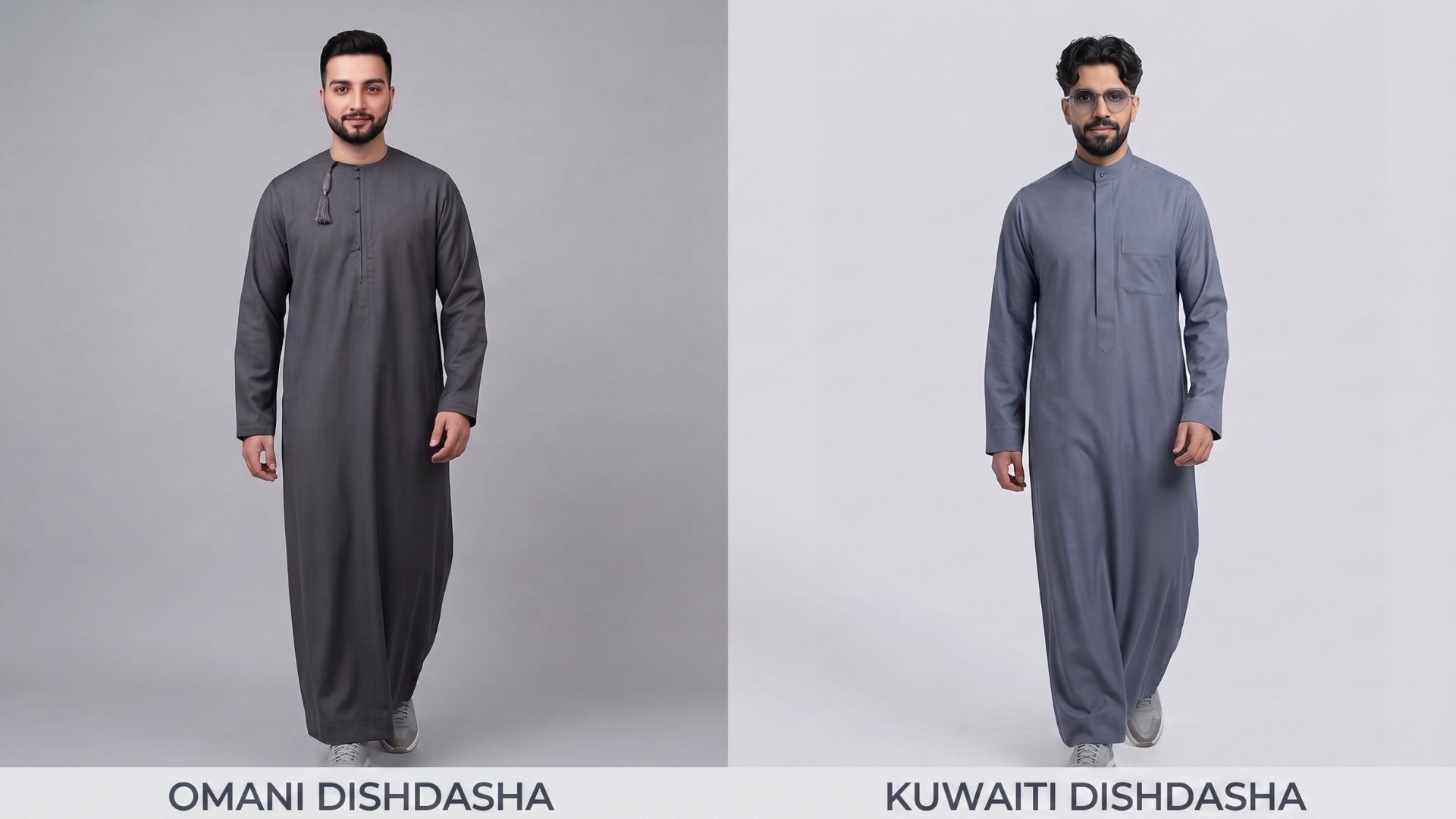
Although a dishdasha and a thobe are the same basic type of garment, the design details differ by country. Kuwaiti and Omani dishdashas have specific features that set them apart from a Saudi thobe or an Emirati kandura.
The kandura (also spelled kandoura or Kandora) is the national dress of Emirati men in the United Arab Emirates. You will hear it called the kandura in Abu Dhabi, Dubai Sharjah, and across all seven emirates. Some people also refer to it as the dishdasha within the UAE, but kandura is the more precise Emirati term.
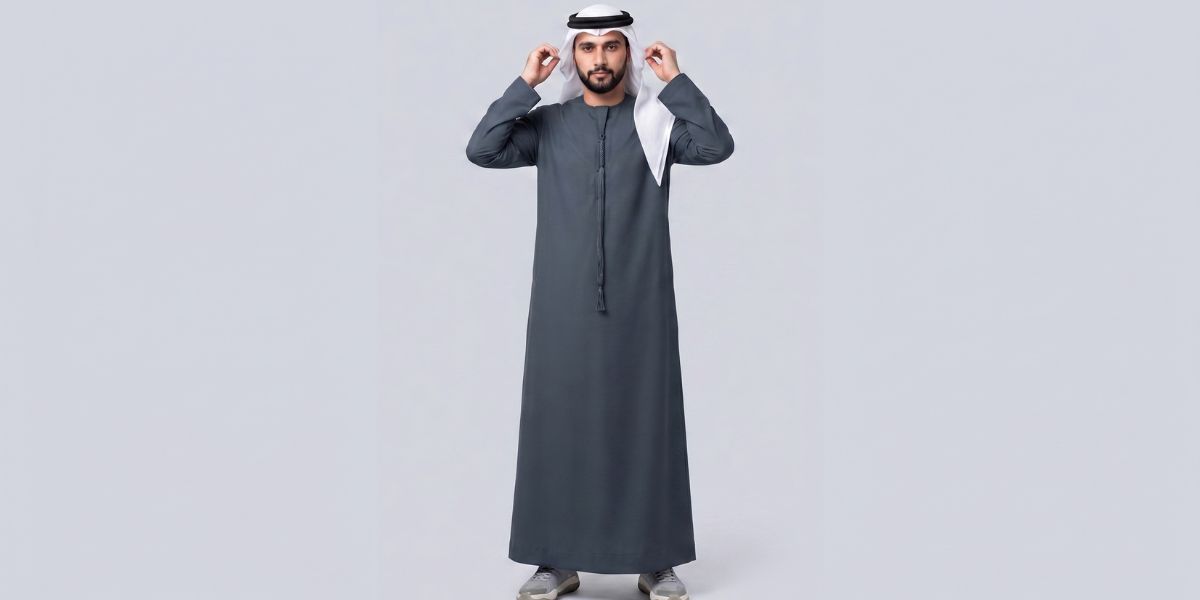
The kandura is known for its exceptional cleanness of design. There is no collar, no visible buttons, and no cufflinks. What makes a kandura instantly recognisable is the tarboosh, a long decorative tassel that hangs from the neckline. Emirati men traditionally spray their tarboosh with oud perfume.
This is the most common question, and the honest answer is: it depends on how specific you want to be.
In terms of general category, yes.
All four are long, loose robes for men that cover the body from shoulders to ankles. They all serve the same purpose: modest, dignified dress in an Islamic and Arab cultural tradition.
In terms of specific design, no.
Each garment has design features tied to a specific country or region. The collar type, sleeve width, presence of a tassel, fabric weight, and headwear pairing are all different. Calling a kandura a jubba or calling a dishdasha a thobe is technically imprecise, even if many people use the terms loosely.
Read Detailed Difference here: Different Styles of Thobes and Dishdashas
Thobe is the umbrella term. Jubba, dishdasha, and kandura are specific regional versions. All four are the same basic category of garment. The differences are in the details that matter deeply to the communities who wear them.
The table below covers every major attribute side by side. This is the most complete comparison available for these four garments.
Feature | Thobe | Jubba | Dishdasha | Kandura |
Regional Name | Thawb / Thobe | Jubba | Dishdasha / Dish-dasha | Kandura / Kandoura |
Countires | Saudi Arabia, Qatar, Sudan | South Asia | Kuwait, Oman, Iraq, Bahrain | UAE (all seven emirates) |
Collar Style | Band or Mandarin collar | Any type | Band collar (Kuwaiti/Bahraini), no collar (Omani) | No collar at all |
Cuffs | Open/French Cuffs | Any Sleeve style | Simple sleeve finish | No cuffs, clean hem |
Button Style | Visible/ Hidden buttons | Not Specific | Few plain buttons | No visible buttons |
Chest Features | May have chest pocket | Custom | Furakha tassel (Oman) | Short/Long Tarboosh |
Fit | Fitted and tailored | Custom Fitting | Relaxed with clean lines | Loose, graceful flowing drape |
Sleeve Width | Narrow, fitted sleeves | Custom | Wider, relaxed sleeves | Wide, elegant sleeves |
Embroidery | Not Common | None | Mostly on Omani and Bahraini Dishdasha | None |
Typical Colour | White (most common), grey, blue | Colorful | White (most common), pastels | White |
Occasion | Daily, Jumu'ah, Eid, formal | Religious Events | Daily, Jumu'ah, national events | Daily (UAE), Jumu'ah, national events |
Headwear Pairing | Shawl/Shemagh/Ghutra + Agal | Taqiyah (kufi) typical / Ghutra | Ghutra + agal (Kuwait), kuma cap (Oman) | Ghutra+Agal |
The collar is the single most important design element that separates these four garments. People who are new to Islamic clothing often mix up these garments because they focus on the overall length and colour. But anyone from the Gulf or South Asia will identify the garment type within seconds by looking at the collar.
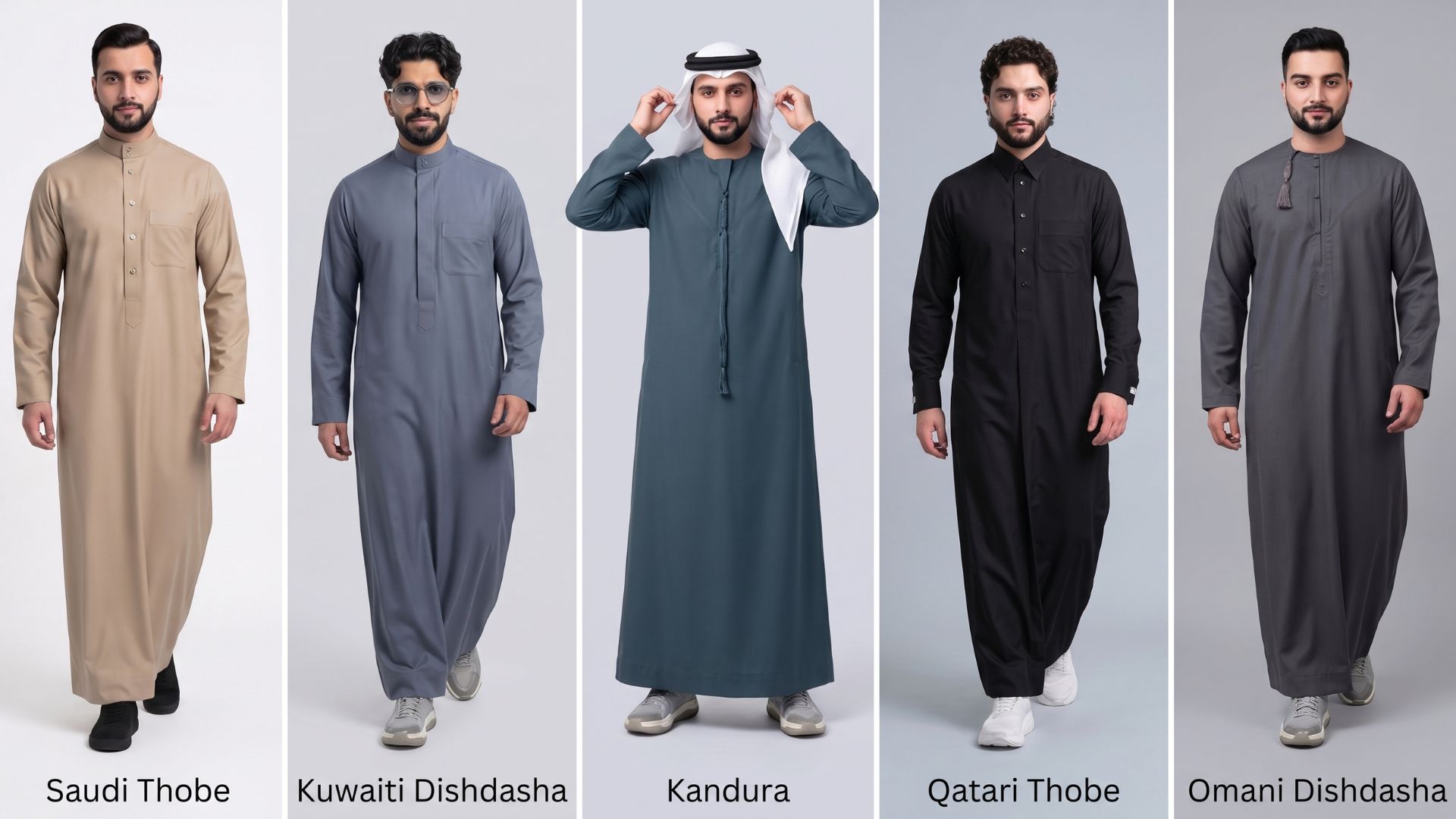
The five collar styles are:
Traditional headwear is part of the complete look for each garment. Wearing the wrong headwear with the wrong garment is something that locals will notice immediately. Here is what goes with each style.
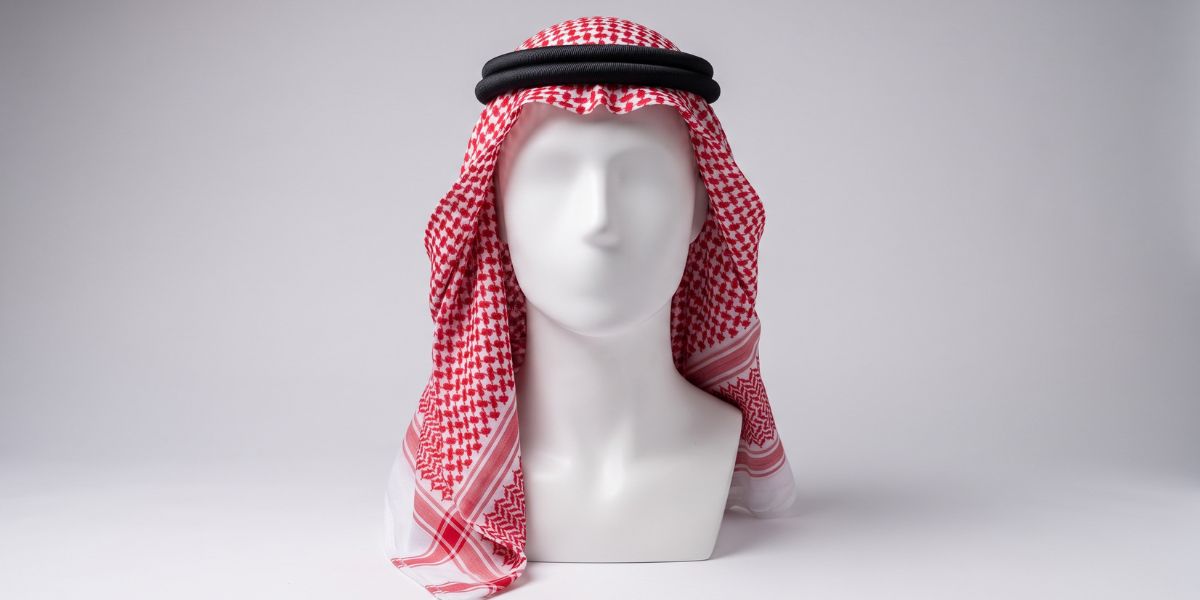
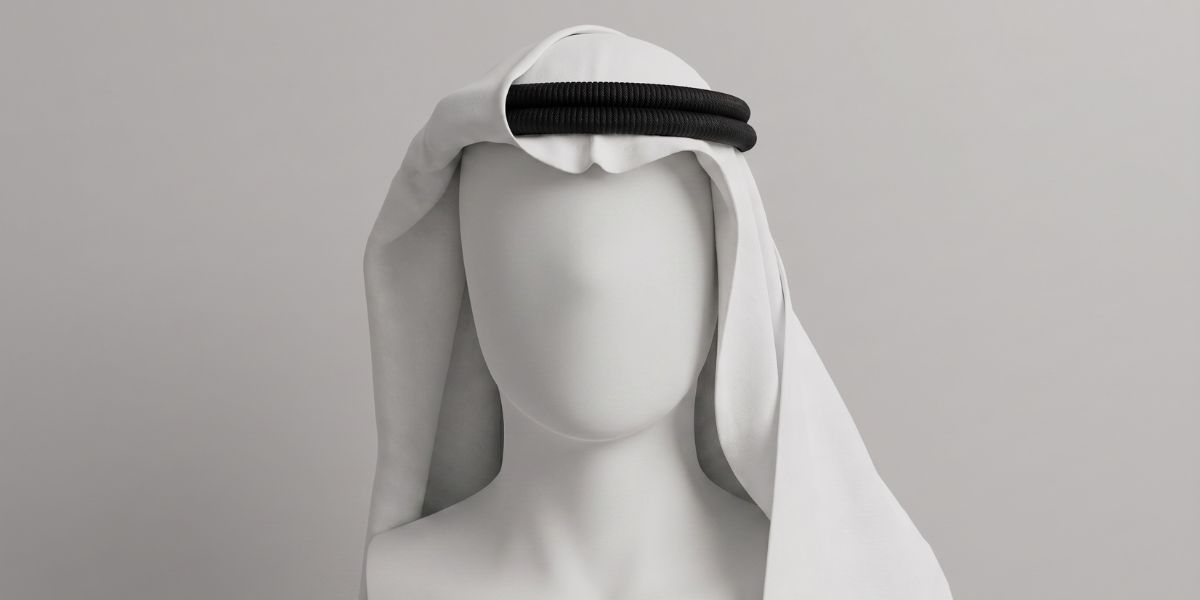
The most traditional pairing is a red and white sheemagh. Saudi thobe is also paired with plain white ghutra (plain white headscarf, smooth fabric) with a black agal (double-rope cord that holds the ghutra in place). Saudi men also wear a shemagh (red and white checked headscarf) with an agal for a less formal look. Without an agal, the ghutra can be worn draped over the shoulders.
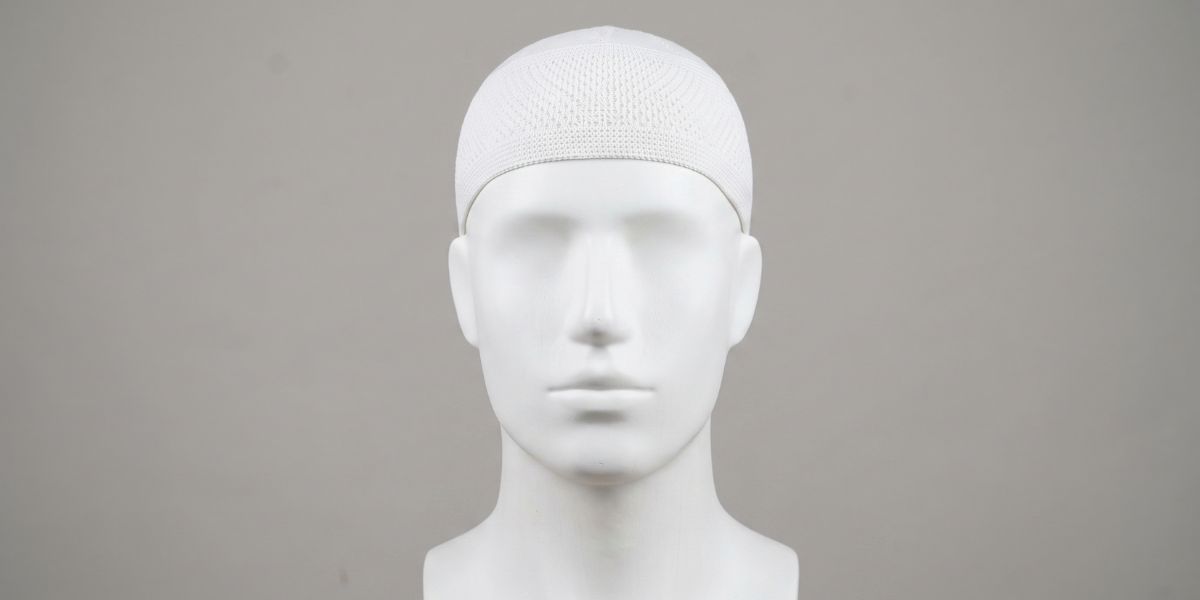
A taqiyah (also called a kufi or prayer cap) is the most common headwear with a jubba. It is a rounded, close-fitting cap that sits on the crown of the head. It can be plain white cotton, knitted, or embroidered. Some men also wear a turban with a jubba for more formal or religious occasions.
Kuwaiti men wear a white ghutra with a double-rope agal. The Kuwaiti way of wearing the ghutra is often flat and even across the head, without the pointed shape you sometimes see in Saudi style.
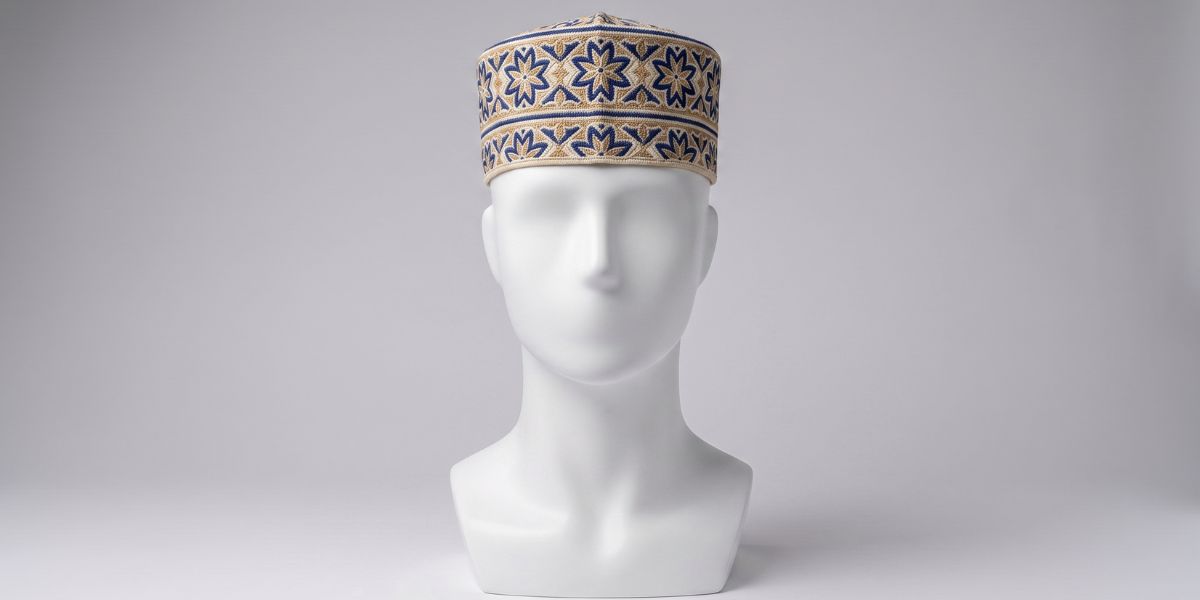
Omani men wear the kuma, which is a round embroidered cap. It fits close to the head and is decorated with geometric patterns. The kuma is as much a part of the Omani national dress as the dishdasha itself. For more formal occasions, Omani men may wear a mussar, a woven, fringed cloth wrapped around the head above the kuma.
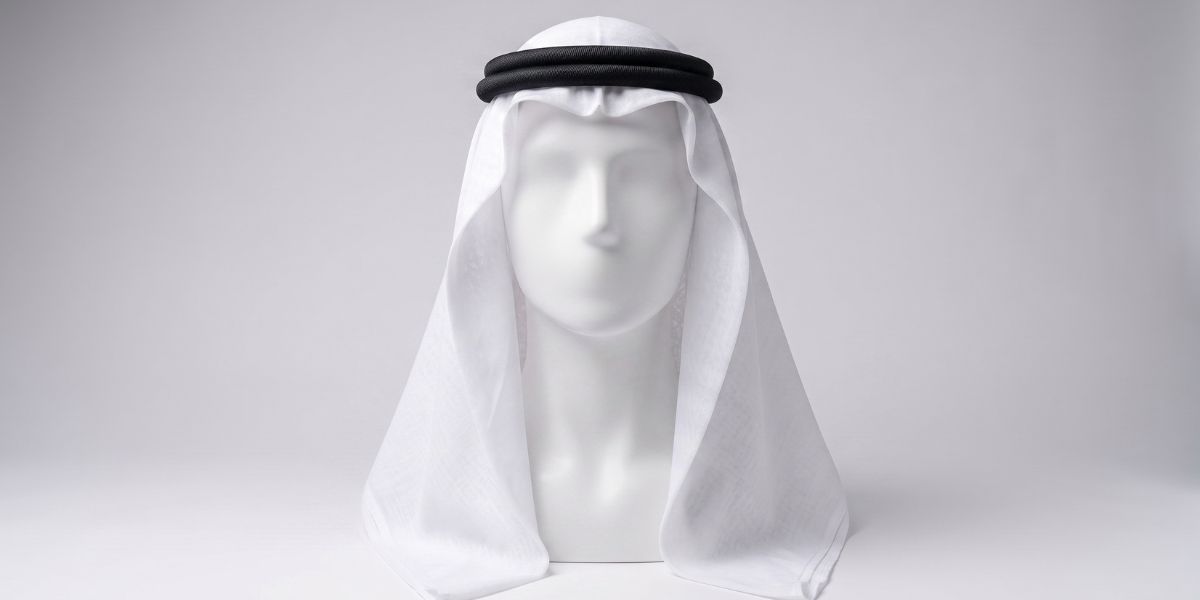
The Emirati kandura is almost always worn with a white ghutra and a double-rope black agal. The ghutra and agal combination in UAE style is very specific: the ghutra is ironed flat, folded in a triangle, and placed on the head so that it falls evenly on both sides. Under the ghutra, Emirati men wear a gahfiyah (a small skull cap) to keep the ghutra in place.
These garments are not simply clothing. Each one carries cultural weight. Understanding this helps you choose with respect and knowledge.
In Saudi Arabia, the thobe is part of everyday life at every level of society. Government ministers, labourers, and students all wear it. The Saudi thobe became the most internationally recognised style because Saudi Arabia has a large global presence through Hajj, oil trade, and media. When people outside the Arab world picture a 'thobe', they are usually picturing the Saudi version with its band collar and French cuffs.
In the UAE, wearing the kandura is a statement of national identity. Emirati government employees are expected to wear it in official settings. The precision of a well-pressed, pure-white kandura with a perfectly draped ghutra and agal is a point of pride. The kandura has also become a symbol of Gulf prosperity and Emirati culture internationally.
Abu Dhabi, where Shabab Al Yola was founded, is the capital of UAE. Our thobes and kanduras are made with the same standards that Emirati men expect from premium quality garments. After 20 years of producing for royal-standard clients in the Gulf, we brought that craftsmanship to the UK.
Kuwaiti men wear the dishdasha from childhood. It is worn to school, to the office, to weddings, and to the mosque. Kuwait is one of the wealthiest nations per capita in the world, and that is visible in the quality of fabric Kuwaiti men invest in. Fine polyester blends and cotton dishdashas in immaculate white are the norm.
The Omani dishdasha stands out for its colour range. While the Gulf norm is white, Omani men wear brown, green, grey, dark red, and blue dishdashas regularly. This makes Omani dress immediately visually distinct. The furakha tassel and the kuma cap complete the Omani look. Oman has a rich textile tradition, and the dishdasha reflects the Omani love of craft and detail.
In Pakistan, India, Bangladesh, and among diaspora communities in the UK, the jubba is primarily associated with prayer and Islamic observance. It is what men wear to Jumu'ah, Eid prayer, and taraweeh. The jubba is the most widely worn Islamic garment in the UK across all Muslim communities because the South Asian Muslim community is the largest Muslim group in Britain.